

Indigenous Spirituality
Environment
Summary Block
This block has no content yet. Items you add to the page connected to this block will display here.
Featured
Interfaith Relationships
Featured

Rev. Doris Davis
Sleeping with the Jaguar
Rev. Doris Davis
Like a river with three tributaries this story has three beginnings. Clearly it began on January 12 this year when I read in TIO about the interfaith, interspiritual festival – Universal Multicultural Dialog0 II – to be held in Guadalajara on May 6-8. But what captured me was the back-story, linking me to deeper layers of my psyche.
Rev. Doris Davis

As an interfaith-active Wiccan who has developed strong relationships with indigenous leaders, I’m familiar with the uncomfortable silences that can jar relationships between indigenous practitioners and institutional religionists. Something is missing. You’re in the same room but don’t know how to talk to each other. Here are some suggestions to bridging that spiritual gap.
Spirituality
Featured

by Weston Pew
On my path over this past year my work for The Sacred Door Trail has taken me to the melting glaciers of Greenland where gigantic ice walls fall into rivers every 20 minutes, shaking ground and bone as a warning call of the coming rising seas.
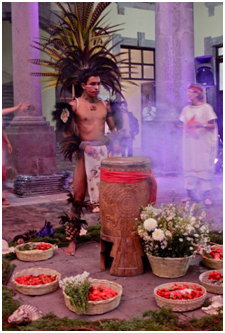
When indigenous communities in México, El Salvador, and Honduras heard about the the Universal Multicultural Dialogue II (UMD II), they responded quickly. As announced in TIO last December, UMD II is an international interfaith festival being held in Guadalajara from May 6-8,2015. Thousands will participate, as they did at the first UMD in 2012, with more than 120 speakers, workshops, panels, ritual ceremonies, and arts. The theme this year is “We All Live Under the Same Sky.”

Doctrine – the codification of beliefs, teachings, and practices – is an important element for established institutional religions. It clarifies what a religion expects of its followers, how to behave toward one another and…
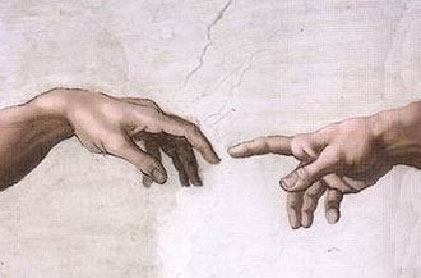
Several years ago, I attended a North American Interfaith Network (NAIN) “Connect” in Las Vegas. The program was organized in three tracks, including one called “Caring for Creation.” As might be expected, all of the Pagans and indigenous people gravitated towards that track.

Can indigenous peoples not practice indigenous religions? What if a non-indigenous person claims to practice their religion? Can people normally not considered indigenous have an indigenous religion? What if they claim they are reconstructing a tradition that died out? What does “indigenous” actually mean, and how does it relate to both people and religion? While I will offer some general suggestions of my own, the most important part of this essay explains why these apparently simple questions are so complicated.
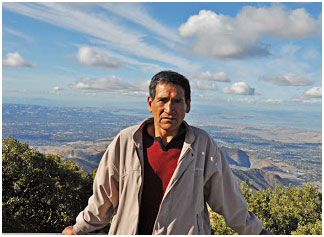
Every town, every culture has a concept of reality which accords with their life experience. The Aztecs, Mayan and Incas, peoples indigenous to Central and South America, created their own cosmovisión, as a way of conceiving the universe.

Neopagan, Indigenous, and Earth-based Spiritual Practice