


by Paul Chaffee, Editor
“It makes me crazy!” my pastor cried out, more than once, in last week’s sermon. She was responding to a New York Times article about American Christian nationalism she’d read the day before.

by Sofia Sayabalian
Having the opportunity to visit Reykjavík, Iceland was a special one. I always thought of Iceland as an isolated place–far, freezing, and frosted with whispers…
by Frank DiGirolamo
“Wow! … You just listened to my whole anthem.” It was late at night, years ago, on North Broadway in Capitol Hill. “Miguel” had just recited his life story to me for a good 20 minutes…
by Camila Torres
When I was a child, I was terrified of the dark. I hated going to sleep, because, once the lights turned off, the sheer possibility of encountering a monster kept me awake…
by Amina Malkin
When talking about religion, my father will sometimes talk about “the chosen people,” a title that Jewish people have historically adopted as a way to reference being descended from…
by Paul Chaffee, Editor
“It makes me crazy!” my pastor cried out, more than once, in last week’s sermon. She was responding to a New York Times article about American Christian nationalism she’d read the day before.
by Richard Reoch
The Buddha was no stranger to genocide. His own people, the Sakyas, were the victims of mass slaughter. One of the final acts of his life, recounted in the opening verses of the Mahaparinirvana Sutra, was to refuse a request to give his blessing to an act of genocide.
by Ruth Broyde Sharone
There is one particular passage in the Torah, in the tenth chapter of the book of Deuteronomy, that both disturbs and delights me. For centuries it has provoked lively debate and wide-ranging interpretations among our sages and rabbis.
by Vicki Garlock
The interfaith movement is all about bringing people together. Most of the time we focus on adults, and social justice issues. Don’t get me wrong. I fully support any and all interfaith efforts. But we need to do more, and we need to do it better.
by Tarunjit Singh Butalia
As a kid growing up in Punjab, India my first formative engagement with interfaith understanding was with a high school friend who was Muslim.
by Marcus Braybrooke
What’s in a name? In June, the Three Faiths Forum, founded 21 years ago in the UK, is changing its name to the Faith & Belief Forum. This reflects the way its work has expanded to include people of all faiths and beliefs, both religious and non-religious.
by Paul Chaffee
The most important thing to know about Reimagining Interfaith (RI), the upcoming conference in Washington DC (July 28-August 1), is how collaborative it is.
by Aaron Stauffer
Good organizers consistently emphasize the importance of leaders “understanding” and “working” on their stories. When they are first getting to know a leader, they ask questions like: What keeps you up at night?
by Maha Elgenaidi
After decades of leading a national nonprofit that counters bigotry through education, I am now firmly convinced that we need new partners to overcome racism, Islamophobia, and exclusivist thinking in our nation.
by Kathleen A. Green
Three years ago, I shared my idea for a doctorate of ministry dissertation – bringing humanists and religious adherents together in interfaith engagement – and received some blank stares, a few shaking heads, and even a couple of flat out discouraging declarations such as “What’s the point?
by Jason Pitzl-Waters
For modern Paganism as a movement to effectively interface with the rest of the world’s religions, we have to be conscious of how we are progressing with Pagan ecumenical and intrafaith initiatives.
by Hans Gustafson
Marginalized traditions, including contemporary Paganisms and Earth-based traditions, are beginning to be welcomed to the table of interreligious engagement in pockets around the U.S. However, the rest of us can still be more welcoming.
by Kevin Singer
In the 2018 Netflix documentary Wild Wild Country, a controversial guru from India and his followers attempt to build a utopian society in Wasco County, Oregon.
by Paul Chaffee, Editor
“Who isn’t at the table yet, who isn’t here?” P. Gerard O’Rourke’s voice, a gruff and gentle Irish brogue, asked the question each month at the start of interfaith board meetings.
by Bud Heckman
A question for you: Why isn’t the movement for interfaith cooperation seen and taken as seriously and central in our societies as are other movements for social justice and the common good, such as race, gender, abilities, the environment, and so on?
by Marcus Braybrooke
After the inauguration of the Interreligious Association for Peace and Development in Vienna last month, I visited the Mauthausen Concentration Camp.
by Anashwara Ashok
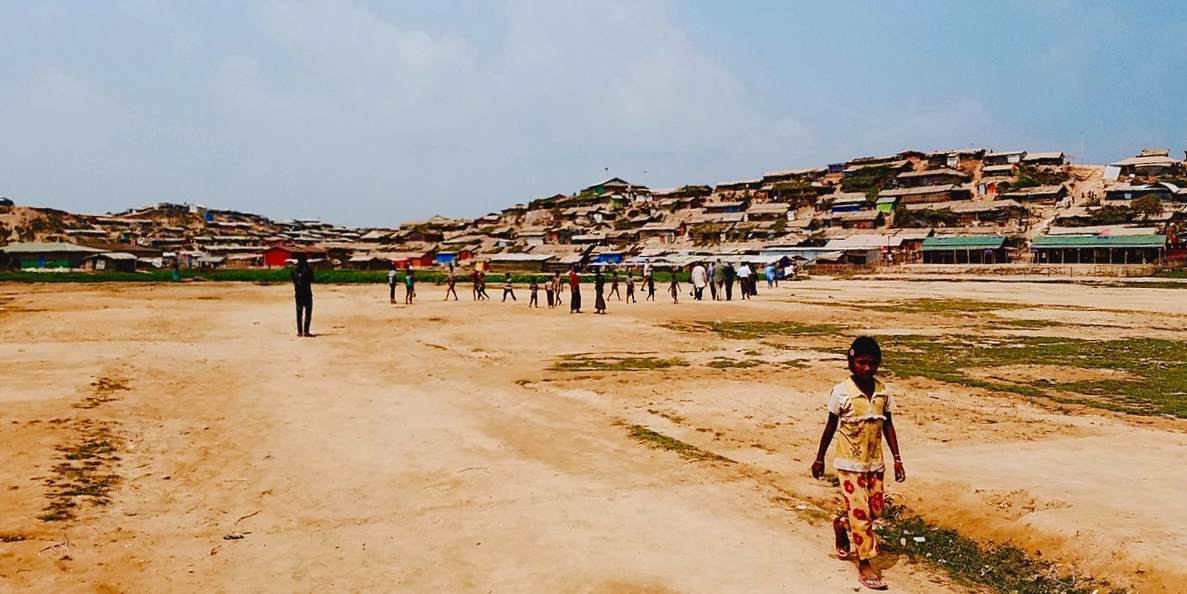
Many factors affect the decisions being taken on the fate of refugees, but one factor is often overlooked: the historical relationship between religion and refugees.
by Don Frew
I can’t count the number of times I’ve heard someone in a group say “We even have a Witch” and point to me to emphasize how inclusive they are. So, in terms of diversity, I occupy a place at one extreme end of the interfaith spectrum.
by Hans Gustafson
Despite an ever-widening door to the growing tent of interreligious engagement, there remains work to do. Interreligious studies in the academy, as well as the interfaith movement in the wider community, have blossomed in the West over the last few decades.
by Ruth Broyde Sharone
Her lineage offers no clues. Martha Alice Perkins was born in La Fayette, Indiana in 1947, the daughter of a state policeman and devoted church-going Methodist mother, as well as the granddaughter of a member of the local Ku Klux Klan.