

Religious Freedom

by Brian Carwana
We live in a time when seemingly difficult conversations – including around race, gender, and sexual orientation – have become an important part of the public discourse. However, one arena, central to…

by Emina Frljak
Many would say hate speech is just words…but words can hurt, and words can and do turn into action. From “harmless” hate speech, come hate crimes. There are sadly many examples of hate speech…

by Don Frew
A year into my public information work, I saw notice of a conference called “Deception & Discernment: Exposing the Dangers of the Occult.” I thought I should attend and see…

by Rabbi Anson Laytner
For over a thousand years, there has been a Jewish community in Kaifeng, China, making it one of the most long-lived continuous Jewish communities in the world. Never more than…

by Paul Chaffee
Stories from Institutional Religion – The Far Reaches of Faith and Practice – In Memoriam


by Hans Ucko
Last March the Religious Freedom Project at the Berkley Center for Religion, Development, and World Affairs published a series of short papers about proselytism in their publication Cornerstone. Each author was…


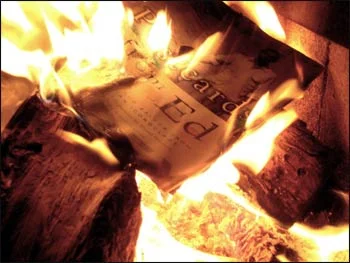
We all know that banning books is wrong. So why is it so tempting?
Last month, for the 32nd year, The American Library Association observed Banned Books Week, a celebration of the “freedom to read” and a chance to bring “national attention to the harms of censorship.”

A shorter version of this article was originally published October 12, 2012 by the Huffington Post. Mr. Speckhardt has added several paragraphs at the end, updating his analysis. A library of stories dramatizing his thesis have been written since; his basic focus on the “need to ensure that a person’s freedom of thought and speech is paramount” continues to ground the whole issue of religious freedom. Ed.
What is religious freedom? Is it the freedom to worship or otherwise interact with God, gods, or other things and entities as one sees fit? Is it freedom of conscience in terms of the supernatural? If religious freedom also involves the right to live out one’s religion in the public sphere, how far does that right extent? If religious freedom involves the right of churches (and like organizations) as well as individuals, to what extent do they operate independently of state control? Steven D. Smith’s The Rise and Decline of American Religious Freedom is an elegy for an expansive understanding of the “first freedom” protected by the First Amendment.

Bringing Everyone to the Table

A Plea for Justice, However Delayed

The International Association for Religious Freedom – a Profile<

In what could go down as one of its most notable reckonings of the era, the Supreme Court heard arguments next week in two major gay marriage cases. As the advocates and justices prepare to spar over California’s Proposition 8 and the federal Defense of Marriage Act, important constitutional principles had a much-needed day in the sun.
What is religious pluralism? The Aspen Institute defines it as “the state of being where every individual in a religiously diverse society has the rights, freedoms, and safety to worship, or not, according…