

Environment/Climate
Climate Change

by Sadhvi Bhagawati Saraswati
The cycle of life is intricately linked to water. From our first nine months swimming in a womb to our ashes being immersed in a sacred river or scattered across the ocean…
by Kyle Lemle
We’ve all read the numbers and heard the forecasts: 350 ppm of carbon, three meters of sea level rise, or three degrees Celsius.
by Estrella Sainburg
For longer than I can remember, and for reasons at the heart of my being, I have loved and cared about the natural world. Earth is precious, sacred, and beautiful; home to you and me.
by David Loy
Interest in eco-dharma — the ecological implications of Buddhist teachings — is growing after years of apparent indifference and little conversation about it in Buddhist sanghas (communities). The environmental crisis has been in and out of headline news since at least 1992, when the first President Bush attended the Earth Summit in Rio de Janeiro

by Philip Clayton
This is the story of the interfaith movement and climate change. It is also the story of a scholar of science and religion who gradually realizes that global climate change is the most urgent threat that humanity faces.Rampant poverty, social inequalities, the unjust treatment of the global South, each of these is magnified ten or a hundred fold by climate disruption.

by Justin Catanoso
On May 24, 2017 a grim-faced Pope Francis handed a signed copy of Laudato Si to President Trump during his visit to Rome. The U.S. president, who has called climate change “a hoax,” promised to read the papal encyclical, a spiritual and secular plea to save the Earth from environmental destruction. A week later, Trump announced plans to pull the United States out of the 2015 Paris Agreement

by Mary Evelyn Tucker and John Grim
There is a dawning realization from many quarters that the changes humans are making on the planet are comparable to the changes of a major geological era. The scientific evidence says we are damaging life systems on Earth and causing species extinction at such a rate as to bring about the end of our current period, the Cenozoic era, and ushering in the Anthropocene.

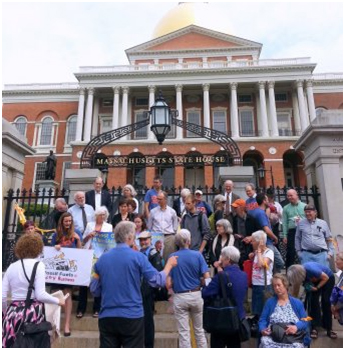

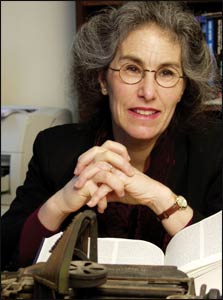
In an impassioned, eloquent plea in San Diego last month, Laurie Zoloth, newly appointed 2014 president of the Academy of American Religion (AAR), called for a conscious “interruption” in our lives to take into account the dire climate crisis and to make substantial changes in our daily behavior.
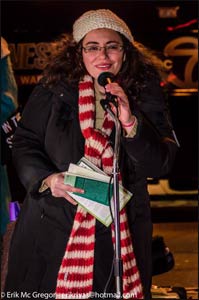
On the evening of Sunday December 7, faith communities around the world staged vigils, calling for climate action. These vigils were organized through the Our Voices campaign, a global multi-faith campaign expressing the moral imperative behind climate change, of which Religions for Peace USA is a continental partner.
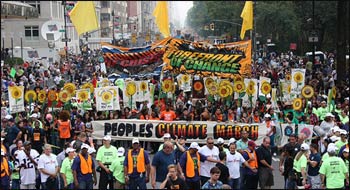
Sunday, September 21, 2014, the UN International Day of Peace. The sky was clear, the sun shining, and the air was vibrating with excitement. You could sense an unmistakable whiff of history-in-the-making. Soon mid-town Manhattan would become a rolling wave of humanity, a moving festival of people of every age, race, ethnicity, nationality, and belief. Most wore casual attire, some religious garb, and others chose colorful costumes and body paint. An impressive assortment of headgear showed up as well: hijabs, turbans, kippas, garlands, feathers, panama hats, and baseball caps.

If you read the reports on the impact of Climate Change, which – science aside – are bewildering enough, you might have come across a couple of repeated points. Let’s try and boil some of them down to plain language:

A Religions for Peace USA Webinar with GreenFaith
United Religions Initiative (URI) Offers an Alternative
Why You Should See this Video

Tools for Getting Engaged

What It Takes to Become an Activist
Leveraging Finance for the Sake of the Planet

Around 1995 an intact and healthy aboriginal community’s pristine Amazonian environment was threatened by development companies looking for oil, minerals, and other resources. The Achuar people of Ecuador are a “dream culture”; their leaders began to perceive in their visions that they needed to connect with like-minded spirits among people of the very same developed world which was threatening them.


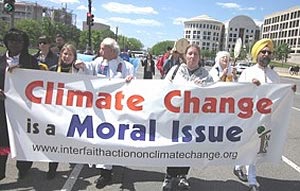
For 44 years I have been a progressive activist and organizer, and for the last nine, a climate activist. Over these years I’ve always known that my upbringing in a family that took seriously the teachings and life example of Jesus of Nazareth had a lot to do with why I chose this course. Recently the importance of that spiritual grounding resurfaced as I’ve interacted regularly with people of various faiths within the Interfaith Moral Action on Climate (IMAC), a group I helped found about a year ago.
Earth

by Marian Van Eyk McCain
A friend of mine who lives deep in a forest and is both an eco-activist and a practising Pagan once remarked to me rather ruefully

by Ta'Kaiya Blaney
Thank you, I channel this thanks from the deepest trench of gratitude I can muster:
For we have done it. The Earth Revolutions, the movements against war, for education, to prioritize the might of the pen
by Katie Reis
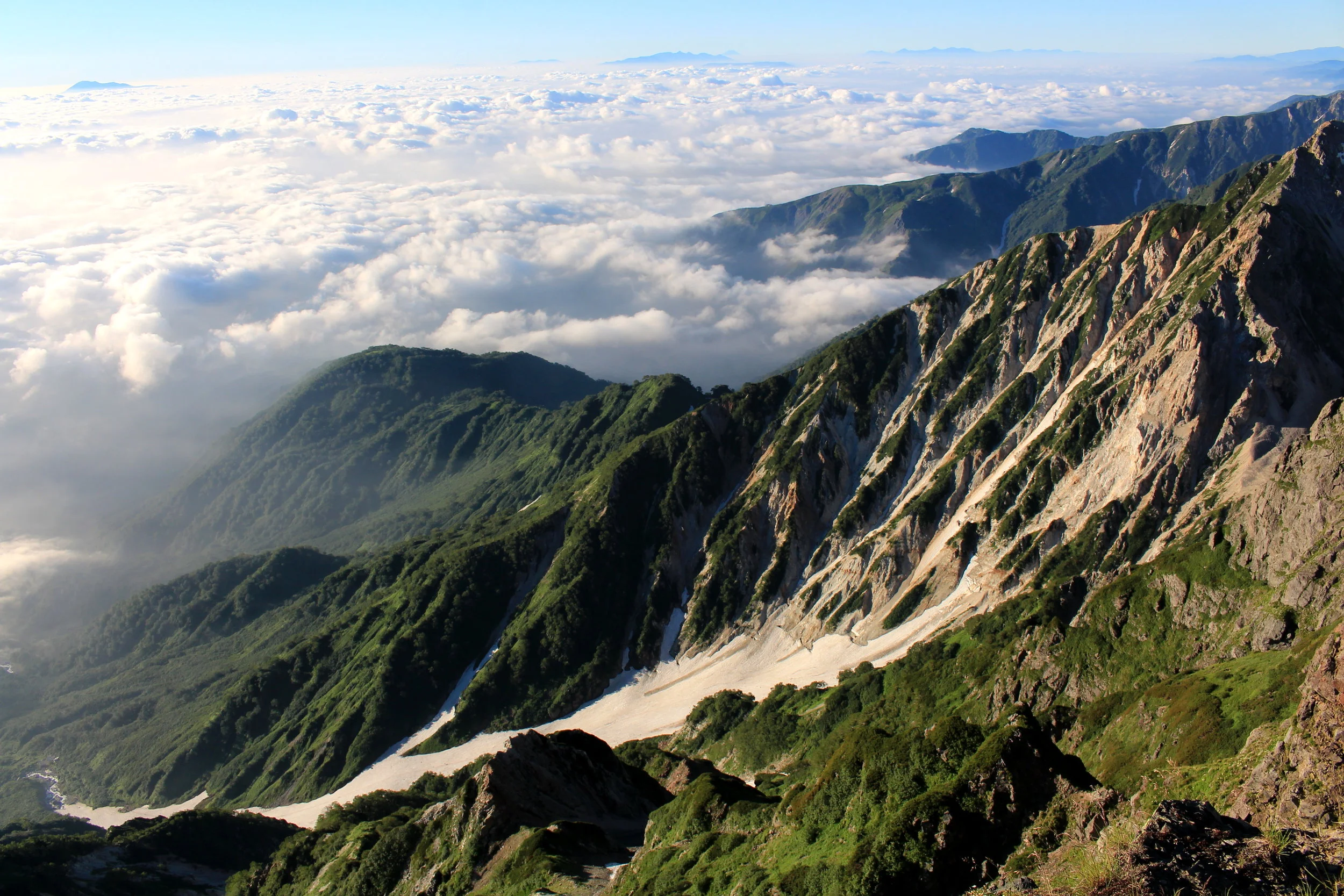
I’m not a religious person. I was baptized a Catholic but slowly realized that many of Catholicism’s beliefs and principles did not fit my own. Over the years, I have explored many different religions. After I visited Japan as part of a student exchange program about a year ago, I became fascinated with Shintoism. Shinto beliefs are encapsulated by a perspective of seeing nature and the world in all its beauty.
by Nimai Agarwal
When I was eight years old, my parents used to take me to the National Mall in Washington, D.C. We would go every week of the summer, spread out a blanket on the grass, and enact a tradition central to our monotheistic branch of Hinduism: singing devotional songs to passersby, often accompanied by a harmonium and brass hand symbols.

from Voices for a World Free from Nuclear Weapons
This summer, two events of nuclear significance happened. First, North Korea successfully launched an intercontinental ballistic missile that demonstrated greater reach and sophistication, signaling that, soon, it will have the capacity to drop nuclear weapons on the United States, Japan, South Korea, China and Russia. Second, at the United Nations, 122 nations of the world voted “never under any circumstances to develop, test, produce, manufacture, otherwise acquire, possess or stockpile nuclear weapons or other nuclear explosive devises.”


Something Essential to Be Remembered

Reconnecting with Home – a Pagan Perspective
Falling in Love Again with What was Lost
Ecology
In an impassioned, eloquent plea in San Diego last month, Laurie Zoloth, newly appointed 2014 president of the Academy of American Religion (AAR), called for a conscious “interruption” in our lives to take into account the dire climate crisis and to make substantial changes in our daily behavior.
Grassroots Religion Going Green

The Forum on Religion and Ecology – A Profile
On These Shoulders – Unexpected Pioneers in Caring for the Earth
Why You Should See this Video
Something Essential to Be Remembered
What It Takes to Become an Activist
Resources
A TIO Report
Towards a Global Ethic – An Initial Declaration is a cornerstone of the modern interfaith movement. The text was drafted by German theologian Hans Küng at the request of the Council for a Parliament of the World’s Religions.

by Bee Moorhead
As the saying goes, “Everybody talks about the weather, but nobody does anything about it.” Talanoa Dialogue just might change that.

Sustainability
by Yonatan Neril
The Nobel Laureate Toni Morrison tells the following story: A young girl with a bird in her hands went to a wise person. The child asked the wise person, “Is the bird in my hands alive or dead?”

by Louise Mangan
There is a longer and lovelier story about the Earth than most of us have been taught. This older wisdom story is grounded in the beauty and goodness of the natural world.

by Philip Clayton
It’s not a great time for climate watchers. Last week we read that the increase in greenhouse gas will be 2.7% for 2018, compared with 1.6% for 2017, and no increase the three years before that.

by Kiley Price
At a time when Pope Francis is calling upon religious leaders to step up as environmental advocates, Thai Buddhist monks are answering the call.
by Kamran Shezad
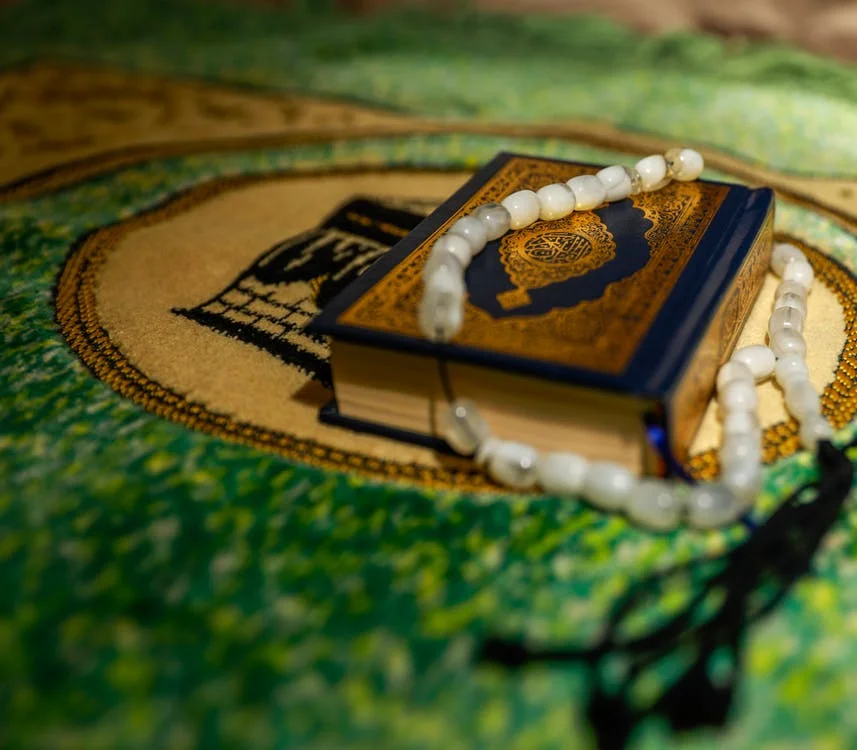
In September 2018, the Bahu Trust in Birmingham, United Kingdom, won ‘Best Green Initiative’ at the British Beacon Mosque Awards. The Bahu Trust represents 22 mosques around the country.

by Grove Harris
In the aftermath of the recent 2018 Parliament of World’s Religions in Toronto, Ontario, I reflected on work with women, faith, and eco-justice. Dr. Vandana Shiva was a major speaker for…

by Katherine Marshall
“Where is the moral outrage?” A questioner at a recent Washington event demanded some explanation for the seeming indifference in the United States to hunger that affects tens of millions of people in Africa and the Middle East. Is it lack of knowledge? Citizens numbed by an unending deluge of horrifying news? A hardening of spirit accompanying Americans’ turning inwards?

by Ruth Broyde Sharone
No ivory tower has ever been able to contain Dr. John B. Cobb, Jr. Even at 92, the premier “eco-theologian” of our times is a man on a mission. He urgently wants to convert us. But not in the conventional sense. He wants us all – regardless of our religious orientation, our racial, national, and cultural origins – to “evangelize” for an “ecological civilization”

From Women's Earth Alliance and United Religions Initiative
URI and WEA come together at a critical time – when efforts to build bridges across nations, learn from each other, and activate people power are needed more than ever. Our partnership enables both organizations to reach deeper and wider, catalyzing a global ripple effect that begins in our communities. The time is now.

by Janet McGarry
The Interfaith Sustainable Food Collaborative (ISFC) is a nonprofit organization working in California’s Sonoma and Marin Counties. It gathers clergy and lay-people for monthly roundtable discussions about food and faith. In June 2014, members of Lutheran, Quaker, Congregational, Methodist, Seventh Day Adventist, Episcopal, and Catholic congregations met at the First United Methodist Church in Santa Rosa, California to learn how their congregations could buy food directly from farmers...

by Paul Chaffee
For those who would love to find some middle ground between the strictures of a vegetarian or vegan diet, on one hand, and the sometime travesties of big agriculture, GMOs (genetically modified organisms), packaged food, and fast food, on the other, the slow food movement may be a satisfying alternative in reflecting on and choosing what you eat and how you eat.

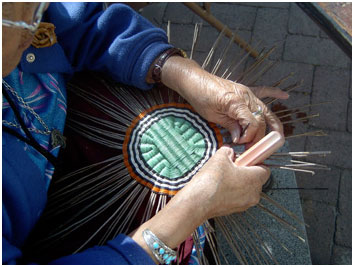
Grassroots Religion Going Green
On These Shoulders – Unexpected Pioneers in Caring for the Earth
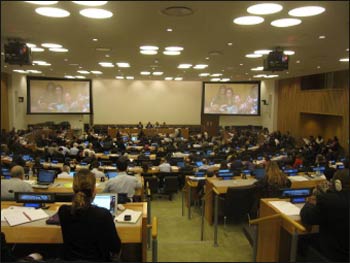
Local-Global Coordination Slowly Developing

“War no more.” That was the hope that inspired Charles Bonney as he explained in his opening address to the 1893 World’s Parliament of Religions. Bonney believed that a major cause of conflict was “because the religious faiths of the world have most seriously misunderstood and misjudged each other.”i One hundred years later, Hans Küng declared that there would be “No peace in the world without peace between religions.”ii
by Katherine Marshall
Increased extreme weather disasters are an expected long-term effect of climate change. Already, changes occurring globally have increased the intensity and duration of heat waves, risks of drought, flooding….