
Countering Islamophobia Through Interfaith Encounters
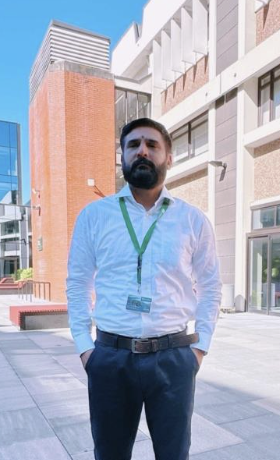
by Muhammad Sohail, PhD Candidate, Victoria University of Wellington, New Zealand
The Muslim world has faced various social, political, and economic challenges recently. Internal divisions, unstable political and social systems, outside interventions, poverty, and unemployment have posed significant barriers to its influence in current global affairs. Of particular concern is the recent rise in extremism and terrorism within the Islamic world, along with growing Islamophobia internationally. A common narrative often depicts Islam as a source of conflict and violence, portraying Muslims as a backward and ignorant society. The seriousness, complexity, and diversity of these issues require multiple social, religious, and economic approaches. However, these problems can be effectively managed through strategic initiatives, such as the promotion of Islam’s commitment to seeking knowledge, peace, and non-violence through interfaith exchanges between Muslims and International societies in international educational institutions.
International educational institutions are the primary destination for Muslim youth and scholars who pursue high-quality education and post-graduation prospects. Some communities develop perceptions and misconceptions about others behind the scenes, often without genuine engagement or firsthand experience. These perceptions significantly affect interactions with the Muslim world. Often, interfaith encounters and socio-religious exchanges can lead to misunderstanding and foster more hatred among the respective societies if not adequately regulated and managed.

Educated youth and scholars can play a key role in fostering positive mutual relations with other religions and societies by promoting interfaith encounters and socio-cultural exchanges within these institutions. International educational institutions serve as a vital space where diverse socio-religious communities can meet, engage, and reflect on their interactions with the “socio-religious other.” Individuals from different backgrounds, perceptions, and narratives share experiences that are essential for meaningful interfaith engagement. Interactions in these settings, described as "a two-way, if unequal, interaction with potentially long-term effects" and characterized as spaces where negotiations happen, are crucial for these processes.
Muslim communities can harness the power of interfaith encounters and socio-religious exchanges to bridge gaps between Muslims and wider international societies. Muslim societies can develop effective strategies to educate and train Muslim students, researchers, and academicians with authentic knowledge rooted in Islamic principles to seek knowledge, peace, tolerance, and inclusivity before pursuing overseas educational opportunities. Muslim nations can empower their students and academicians to negotiate with international communities to reduce bias and prejudice against Muslim societies through continuous engagement and collaborations at the global level. Muslim students and scholars have a greater opportunity to frequently take on everyday diplomatic roles to promote peace through building positive relations with host communities through participation in local customs, festivals, national and religious events, seminars, and workshops.
To begin, Muslim societies could engage Muslim students and scholars in promoting Islamic values from cradle to grave. Islam clearly encourages the pursuit of knowledge, critical thinking, and intellectual growth. This can be seen in the first revelation to Prophet Muhammad, which stresses the importance of reading: "Read! In the name of your Lord who created man from a clinging substance. Read! And your Lord is the Most Generous—Who taught by the pen—Taught man that which he knew not"(Qur'an 96:1-5). Prophet Muhammad further instructed Muslim men and women to seek knowledge, and this priority can be leveraged to reduce tensions and resistance between Muslims and other international societies. Muslims can dispel the negative perception of ignorance associated with them by sharing their deep commitment to knowledge as core to their identity and religion.
Furthermore, Muslim students and educators, could showcase Islam’s philosophy of tolerance, humanity, and universality. Like other religions worldwide, Islam emphasizes the core values of tolerance, compassion, diversity, and religious freedom, preferring attraction to religion rather than coercion. The Quran explicitly states that "There shall be no compulsion in [acceptance of] religion. The right course has become clear from the wrong." (Qur'an 2:256).
The Quran also advocates for interfaith dialogue. "And do not argue with the People of the Scripture except in a way that is best, except for those who commit injustice among them, and say, ‘We believe in that which has been revealed to us and revealed to you. And our God and your God is one; and we are Muslims [in submission] to Him” (Qur'an 29:46). The value of diversity and understanding is another core message: "O mankind, indeed We have created you from male and female and made you peoples and tribes that you may know one another" (Qur'an 49:13). These verses emphasize the importance of dialogue, diversity, acceptance, and universal brotherhood.
Muslim societies can engage in dynamic of interfaith encounters to promote positive engagements between non-Muslims and Muslims through the sharing of the philosophy of Islam and the values of knowledge, humanity, and universality. This strategy will not only cultivate educated youth capable of promoting Islam’s message of peace but also aid in distancing the Muslim world from extremist groups and contributing to the reduction of Islamophobia within Western societies and around the world.