

Spirituality/Interspirituality
Book Reviews
Count me a team-member of the interspiritual movement. I am in sympathy with the goals of The Coming Interspiritual Age by Kurt Johnson and David Robert Ord, a grand, ambitious work with an optimistic vision of future global unity. Kurt Johnson’s mental scope on display here is astonishing. A polymath, he was for thirty years a distinguished scientist at the Museum of Natural History, penned an award-winning New York Times best seller about Vladimir Nabokov and butterflies, and regularly contributes to Wikipedia, all attesting to the breadth of his discussion of how humanity came to its current crises of religious conflict and spiritual dis-ease. Johnson and Ord’s ability to weave facts into sweeping historical narrative lends strength to their conclusions.
In this freewheeling book, Kurt Johnson and David Robert Ord attempt a truly daunting task: to tell the story — one that reaches back fourteen billion years — of what they call “the planet’s emerging unity consciousness,”1 or, in terms of their mentor Wayne Teasdale, the emerging Interspiritual Age. The authors define interspirituality as “the sharing of ultimate experiences across traditions,” “a more universal experience of the world’s religions, emphasizing shared experiences of heart and unity consciousness.” Fundamentally, however, interspirituality turns out to be monistic: “the entire religious experience of our species,” they write, “has been a single experience.”
Is there any hope for real change in the human condition? Kurt Johnson and David Ord certainly think so, and I am grateful to them for The Coming Interspiritual Age and its optimism. But I wonder…
Interspirituality

by Marcus Braybrooke
Recently a Muslim was invited to give an Oxford University sermon. The invitation attracted a number of protests. “He does not believe in the divinity of Jesus Christ!” some declared.
by Ben Bowler
One of the biggest problems with discussing religion is the definition of the term. Few words have such breadth and depth of meaning and even fewer words can spark such passionate debate.

by Kurt Johnson
Br. Wayne Teasdale is famous for his “interspiritual” worldview embracing all the spiritual narratives of the world as one collective heritage, arising historically from the conscious experience of our species, and seeks to draw from these resources the tools for altruistic behaviors that can actually build a world so envisioned.
by Ruth Broyde Sharone
“Religion is dead.” I winced as if I had experienced a body blow when I heard these words, delivered by one of the keynote speakers at an interspiritual conference on the East Coast three years ago.The keynote speaker happened to be a friend of mine, a cable show producer who for decades has extoled and promoted the “spiritual-but-not-religious” movement, a growing phenomena that has challenged the value and significance of traditional religions in our times.

by Marcus Braybrooke
Brother Bede Griffith’s (1906-1993) life of physical and spiritual exploration has been important in the spiritual journeys of many, many people, including myself. He was one of the first spiritually resonant models for those of us engaged in interfaith activities more than 50 years ago. His life suggested that one could be spiritually grounded and thriving in more than one tradition at the same time.

For at least 12,000 years, since the end of the ice ages, humanity has been on a journey of separation – pulling back from nature and becoming ever more differentiated, individuated, and empowered. In recent decades, we have become so dominant as a species that we are producing Earth-changing trends – global warming, species extinction, unsustainable population, massive famines, waves of migration, and more – that threaten humanity’s future.

by Dr. Ed Bastian
Generally speaking, the word wisdom often connotes a holistic knowingness harvested from the totality of one’s life experience, including knowledge gained through intellectual conceptualization and empirical observation. From a spiritual perspective however, Wisdom (note the capital “W”) is generally said to be the result of a transcendent insight that surpasses, informs, and then guides our everyday thoughts, perceptions, and mental projections of reality.
by Isabella Price
On December 25, Christians around the world will gather to celebrate Jesus’ birth with joyful carols, special liturgies, festive meals and gifts…Yet, what are the origins of Christmas and how…

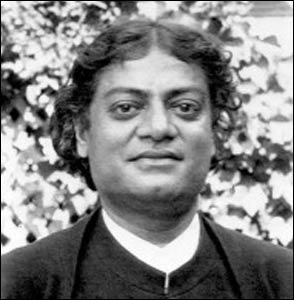
When Swami Vivekananda spoke to the opening plenary of the first World’s Parliament of Religions on September 11, 1893, he quoted lines from an ancient Hindu spiritual hymn:
As the different streams having there sources in different places all mingle their water in the sea, so, O Lord, the different paths which men take through different tendencies, various though they appear, crooked or straight, all lead to thee.
Out of Many, One in the Spirit

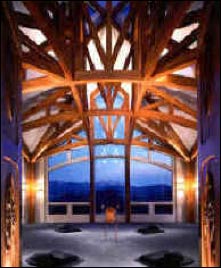
Report from Mt. Vernon, Washington, September 29-October 4, 2013


Here in the mountains of northern New Mexico where I have spent most of life, the winter solstice season is marked by fire. During Advent, families and businesses fill small paper bags with dirt and nestle yellow votive candles inside them. They line the adobe walls around their homes and the low hanging flat rooftops of their shops with these homemade lanterns, called farolitos, and kindle them at sunset. The entire valley glows with tiny golden lights. What began as a Spanish Catholic tradition is now a cherished ritual for our entire multicultural community.
In this freewheeling book, Kurt Johnson and David Robert Ord attempt a truly daunting task: to tell the story — one that reaches back fourteen billion years — of what they call “the planet’s emerging unity consciousness,”1 or, in terms of their mentor Wayne Teasdale, the emerging Interspiritual Age. The authors define interspirituality as “the sharing of ultimate experiences across traditions,” “a more universal experience of the world’s religions, emphasizing shared experiences of heart and unity consciousness.” Fundamentally, however, interspirituality turns out to be monistic: “the entire religious experience of our species,” they write, “has been a single experience.”

Mysticism

by Sofia Sayabalian & Cloë Poole
Two young leaders from the Center for Ecumenical and Interreligious Engagement (CEIE) attended their first Parliament of the World’s Religions event. It was held in Chicago…

by Marcus Braybrooke
Pierre Teilhard de Chardin (1881-55), a distinguished paleontologist, theologian, and visionary, held a unitive vision that covered a wide canvas. He tried through his writings to bring the worlds of science and religion together, believing their combined insights held the key to creating a greater sense of global community.
Spirituality
by Sofia Sayabalian & Cloë Poole
Two young leaders from the Center for Ecumenical and Interreligious Engagement (CEIE) attended their first Parliament of the World’s Religions event. It was held in Chicago…

by Marian Van Eyk McCain
A friend of mine who lives deep in a forest and is both an eco-activist and a practising Pagan once remarked to me rather ruefully

by Stephen Hill
Little is truly known about the Chinese philosopher Lao Tzu, the guiding figure in Daoism (also translated as Taoism), which is still a popular spiritual practice.

by Paul Chaffee
The religions of India – Jainism, Hinduism, Buddhism, and Sikhism – are less familiar and stranger to most Americans than the Abrahamic religions, which have dominated America since Columbus.

by Diana Butler Bass
Here in the labyrinth, I struggle to find words to describe what I feel. Up on the mountaintop, I knew the language to describe God: majestic, transcendent, all-powerful, heavenly Father, Lord, and King. In this vocabulary, God remains stubbornly located in a few select places, mostly in external realms above or beyond: heaven, the church, doctrine, or the sacraments.

by Deborah Moldow
A vast spiritual community is emerging all over the world. It has no name. It has no church or temple and no scripture. No one sees it. And yet it is among the most potent forces for evolutionary change on the planet.
by Patricia Adams Farmer
Being present, the most basic attitude for the spiritual pilgrim, is not an easy practice. For being present means not only letting the bright gladness of summer daisies seep into our souls; it also means a face-to-face encounter with the fears that haunt our days.

by Philip Goldberg
Adapting the perennial wisdom of the Yoga tradition to contemporary life and a diversity of religious and spiritual perspectives is, and always will be, a work in progress. It is also a highly individual project, with few one-size-fits-all answers to the conundrums and challenges that arise. That’s why the Upanishads call the spiritual path a razor’s edge: You have to tread carefully, with keen vision, intellectual discernment, acute intuition, and a really good sense of balance.
by Katie Reis
I’m not a religious person. I was baptized a Catholic but slowly realized that many of Catholicism’s beliefs and principles did not fit my own. Over the years, I have explored many different religions. After I visited Japan as part of a student exchange program about a year ago, I became fascinated with Shintoism. Shinto beliefs are encapsulated by a perspective of seeing nature and the world in all its beauty.

by Vicki Garlock
Kids love to explore. And a quick look at any summer camp guide will support that claim. Last summer, kids in our area could attend Camp Explorer, Camp Eco-Explorer, Camp Adventure, Camp Discovery, Camp Run Wild, Camp Invention, or Nature Adventures, to name just a few!

by Philip Clayton
This is the story of the interfaith movement and climate change. It is also the story of a scholar of science and religion who gradually realizes that global climate change is the most urgent threat that humanity faces.Rampant poverty, social inequalities, the unjust treatment of the global South, each of these is magnified ten or a hundred fold by climate disruption.

by Marcus Braybrooke
During times of violence and war, it can seem like humanity is on a downward slide. And yet there are those who look past the present state and envision something greater emerging. Such is the case with Sri Aurobindo (1872-1950).

by Jeff Genung
From the moment a frustrated Neanderthal said to herself, “How am I supposed to cut this meat without a knife?” to the day Gutenberg’s boss blurted “I need thirty copies of this document by noon,” our species has been creating tools that transform life as we know it.

by Philip Goldberg
A dispute at a small evangelical college; the death of a Supreme Court Justice; the presidential election campaign – these and other recent events remind me, yet again, that our religious attitudes and spiritual orientations are almost infinitely diverse. Not only are there vast differences among adherents of every tradition, but also diversity within the diversity within the diversity.

by Weston Pew
On my path over this past year my work for The Sacred Door Trail has taken me to the melting glaciers of Greenland where gigantic ice walls fall into rivers every 20 minutes, shaking ground and bone as a warning call of the coming rising seas.

by Deborah Streeter
“In the past, models of being church have been based on belief. We are exploring a new model of church, built on spiritual discovery and transformation of life. The question no longer is, ‘What do you believe?’ but ‘How has your life been transformed?’”

by David Parks-Ramage
Following his baptism in the Jordan River and his time in the wilderness Jesus emerges into his ministry. His first words? “The time is come. The Realm of God is near.” You can almost feel it in Jesus’ words, finding fulfillment in your hearing. It is here. Now. Present. There is nowhere to look, no far off and away to get to. God is present here, in life. That is the good news.

With a vast diversity of member communities, Religions for Peace USA has a wealth of knowledge and experience to share about working for peace. These communities meditate, pray, advocate for justice, and work for a better world in many ways. Sometimes, simply hearing these stories can be inspiring for our own work. In this month’s issue, we profile a Jain community in Michigan, as Nirmala Hanke, M.D. leads us through some of the core tenets of Jainism and its applicability to our world today.

by Frederic and Mary Ann Brussat


Neopagan, Indigenous, and Earth-based Spiritual Practice
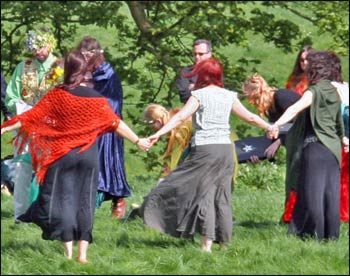
Meditation, Magic, and Invocation

An Interview with Jay Michaelson, Author of Evolving Dharma: Meditation, Buddhism, and the Next Generation of Enlightenment (North Atlantic Books, 2013)

One Path in Hindu Spiritual Practice

Skylight Paths Spirituality Series a Treasure House
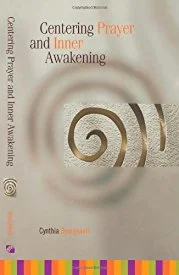

A Review