
TIO Public Square
Recognizing the Divine in Others
by Robert P. Sellers
Found in Victor Hugo’s 1862 novel, Les Misérablés, is a beautiful example of the transformative power of recognizing the Divine in those we encounter.
After being held 19 years in a cruel French prison for stealing a loaf of bread, Jean Valjean had become an embittered, lonely man, rejected by others who saw him as nothing more than a guilty and worthless ex-convict. But Bishop Myriel welcomed the man into his home, offering him food, shelter and dignity. In the middle of the night, however, Valjean awakened – and reverting to the ways of survival he had learned – he stole the bishop’s silver plates and cutlery and escaped into the Paris streets. When the police stopped the fleeing man and discovered his sack of treasures, they brought him back to the bishop’s house to secure a written statement concerning the theft. But the bishop did not press charges. Instead, he claimed the valuable items were his gift to Valjean, and – turning to a pair of silver candlesticks still on the shelf – he smiled at Valjean and “scolded” him for forgetting the very best pieces of silver – intended, he said, to be his gift, as well.
Myriel saw something in Valjean that others could not see or were not willing to recognize. He saw possibility. He sensed that the man of good character locked inside Valjean could be released. He believed that affirming Valjean could challenge him to change; it would transform the possible into the actual.
In the musical adaptation of the story, the bishop’s gracious actions lead to the stirring lyric, “To love another person is to see the face of God.” This impulse is exactly what is needed in our country today. We have become programmed by our cultural and political wars to avoid, isolate, marginalize, demean, belittle, caricature, ridicule, malign, criticize, defame, misrepresent, disparage and despise those who are different from ourselves.
I am not convinced, however, that the solution to our national dis-ease – our malignant emotional disease of judgmentalism, rejection and hatred – is to love others so that we will see the face of God in them. Rather, I believe it is to see the face of God in others so that we can love them. Seeing God in other persons is to recognize that they are made in God’s image and therefore are persons of incalculable worth.
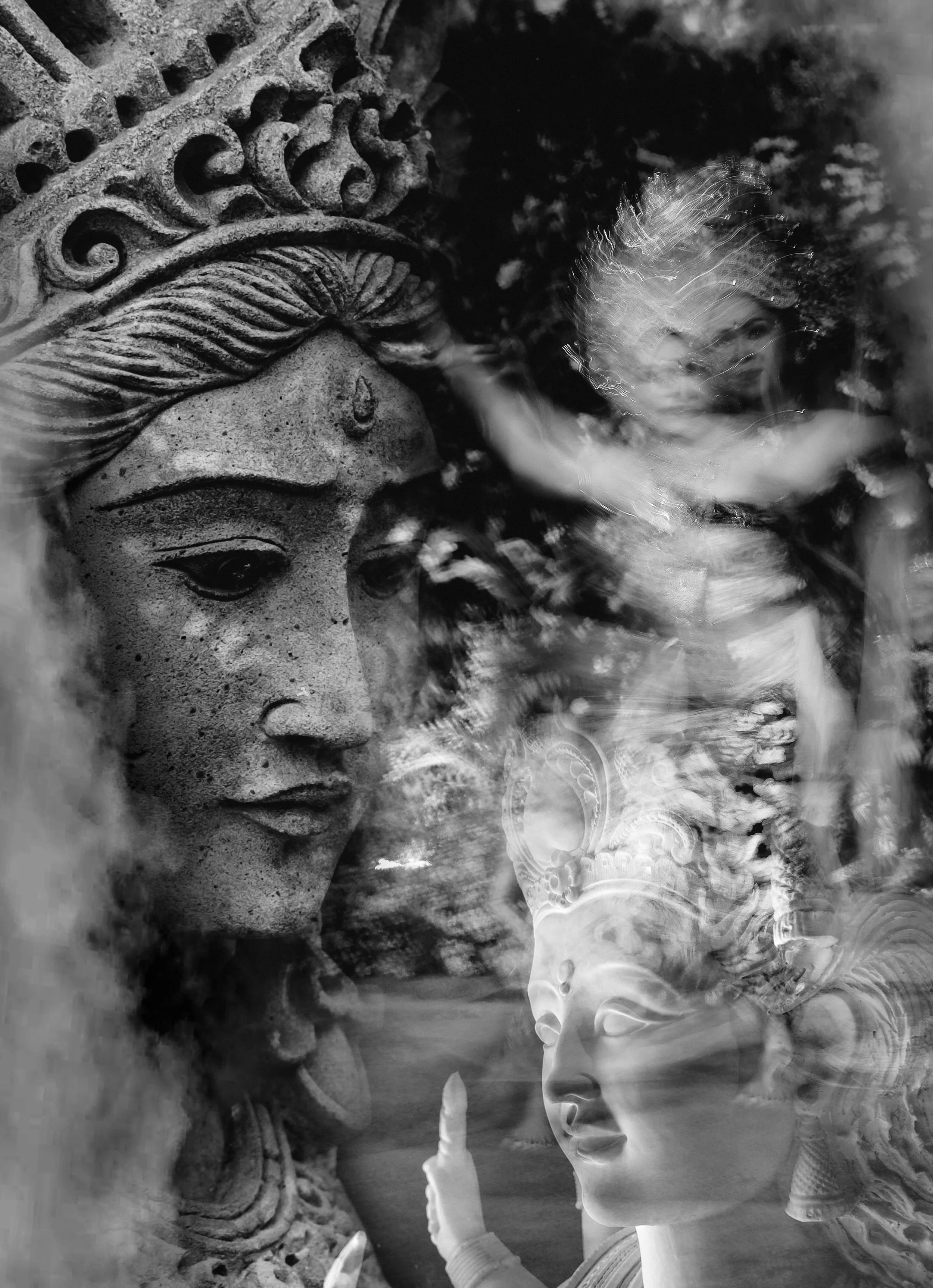
Recognizing the Divine in others is a foundational concept in many of the world’s great religions.
INDIGENOUS RELIGIONS
Two Native American tribal religions are representative of indigenous traditions all over the world, where “spiritual power permeates all living beings, ancestors, and the natural world.” This belief means that all humans, animals, plants and other elements of nature such as rivers or mountains are part of “an extended family or community of living, spiritual beings.” Sioux tribal behavior toward others is governed by a view that every sentient being encompasses active spiritual energies which demand an ethical response. Hopi concepts of the “good mind” or “good heart” – present in every living spiritual being – must inspire respectful, loving actions which can benefit the whole community.
In African indigenous religions, seeing God in others is associated with the philosophy of Ubuntu (‘humanity’) where “human worth is tied directly to community and spiritual interconnectedness.” The Zulu concept of Umuntu ngumuntu ngabantu (‘a person is a person through other persons’) is popularly known as the maxim “I am because we are.” We are interconnected, so we value and respect one another, living in mutual solidarity and compassion.
EASTERN RELIGIONS
Hinduism’s core belief is that the same Divine essence (Brahman, or ‘the ultimate, universal reality’) resides in the Atman (‘the individual soul’) of every living being. The common Hindu greeting of “Namaste” can be translated “I bow to the divine in you.” The often-used Vedic phrase, Tat Tvam Asi (‘That Thou Art,’ or ‘Thou Art That’) recognizes that another person’s essential inner nature is the same as the absolute divine reality and, thus, respecting or serving others is the same as worshipping God.
Classical Buddhism does not envision a creator God, yet it has a parallel belief known as the Tathāgatagarbha (‘the Buddha-Nature’) of every sentient being. This concept teaches that because of this inherent Buddha-Nature, each person has the potential for enlightenment. Therefore, a Buddhist should practice compassion and loving-kindness toward others in order to honor the latent, not-yet developed, Buddha (‘Awakened One’) within them [Ibid.].
Sikhism’s recognition of the Divine in others is based upon the principle of Ik Oankar (‘the Oneness of creation’), which means that the same divine jot (‘light’) is present in every human being. Accordingly, human distinctions that typically separate people – such as race, ethnicity, gender, caste, religion, or social status – are irrelevant, and though not totally artificial, should be ignored. Since the Divine resides in everyone, one’s personal haumai (‘ego’) must be overcome by practicing nimrata (‘humility’) with others.
MEDITERRANEAN RELIGIONS
Judaism grounds its respect for others on the concept of Tzelem Elohim (‘the image of God’) found in Genesis 1:27, the very first chapter of the first book in the Hebrew Bible, or Old Testament. Since every person is made in God’s image, “shaming, hurting, or disrespecting another person is viewed as an affront to God” [“Seeing God in others, as taught in religions other than Christianity,” Ibid.]. By implication, then, since God is correctly understood as non-binary – having created humankind, both male and female, in God’s likeness, despite the fact that God’s own self is neither male nor female but rather Spirit (John 4:24) – therefore persons who understand themselves as nonbinary, transgender, agender or gender fluid are also made in God’s image and should be loved, valued and respected. If for no other reason, we respect non-binary persons because they have been created in the image of a non-binary God.
Although Islam upholds the distinction between the Creator and the creation – a doctrine called Tawhid – it also teaches that humans possess Fitrah (‘divine nature’) through which they bear both the Ruh (‘Breath’ or ‘Soul’) of God and possess the Ayat (‘Signs’) of the Divine. These signs are God’s creativity, mercy and wisdom, which humans share with Allah (‘the God’). Serving humankind, especially the disadvantaged or orphaned, is therefore an expression of love and obedience to God [Ibid.]. While orthodox Islamic theology views Allah as transcendent and unimaginable, writings of Sufism, or Islamic mysticism, explore the concept of recognizing the “face of God” through creation and human interaction. Music of the Soul, a work by Sufi author Sidi Shaykh Muhammad Sa'id al-Jamal ar-Rifa'i, commends the spiritual exercise of looking past outward appearances to “see the face of God in every face, in everything.”
My own religion, Christianity, is centered around the life example and teachings of Jesus, who treated others with compassion and respect. He was approachable by women and men, the poor and rich, old and young, sick and healthy, and those considered to be righteous and others judged to be sinners. Even more counterculturally, he saw marks of the Divine in both Jews and Gentiles.
Seeing God in Each Other, edited by Sheryl Kujawa-Holbrook, an Episcopal priest in the Diocese of Los Angeles, offers essays concerning ways to create congregations that are anti-racist in our ethnically-diverse cities. Best-selling author and teacher Barbara Brown Taylor, writes in her book Holy Envy: Finding God in the Faith of Others: “The same God who came to the world in the body of Jesus comes to me now in the bodies of my neighbors” [Barbara Brown Taylor, Holy Envy: Finding God in the Faith of Others (San Francisco: HarperOne, 2019), 194].
A related Christian theme is recognizing the face of Jesus in the vulnerable, despised and forgotten. In Jesus’ parable of the Last Judgment in Matthew’s gospel, he taught that whoever gives food or drink to the hungry or thirsty, welcomes the stranger, clothes the naked, or visits the sick and imprisoned is performing the same act of kindness for Jesus, That teaching no doubt inspired Mother Teresa to explain that the reason she could minister to the wretched poor along Calcutta’s streets – and even touch their diseased, festering bodies – was because when she looked at them, she saw Christ in the guise of the poor.
CONCLUSION
A famous fictional representation of this theological theme is found in Fyodor Dostoevsky’s novel, Crime and Punishment. Raskoinikov is a tormented man who commits murder and, in his bitterness and self-hatred, isolates himself from others. Confessing his sin to Sonya Marmeladova, a young prostitute with whom he has become acquainted, he is transformed by her response. She neither judges nor condemns him but falls to her knees to embrace the suffering student with compassion and forgiveness. In this dramatic scene, Dostoevsky demonstrates that the grandeur of the Divine is not confined to beautiful cathedrals but can be found in the faces of broken and distraught humanity [“Seeing God in others, a literary example,” Ibid].
Our society is tormented and broken in many ways. Hatred for others, particularly those who are different from ourselves, is more evident than perhaps at any other time in our nation’s history. The solution to this tragic dilemma, it seems to me, will not simply be found in our political choices but in our spiritual transformation.
We must accept that we are all persons of infinite worth – even those whom we “cannot tolerate.” We must begin to recognize the Divine in others, so that we can once again love our neighbors as ourselves. This principle is taught by all the great religions, and it is Abiding Truth.