Beyond My Own Song: Improvisation as a Way of Belonging
by James Falzone
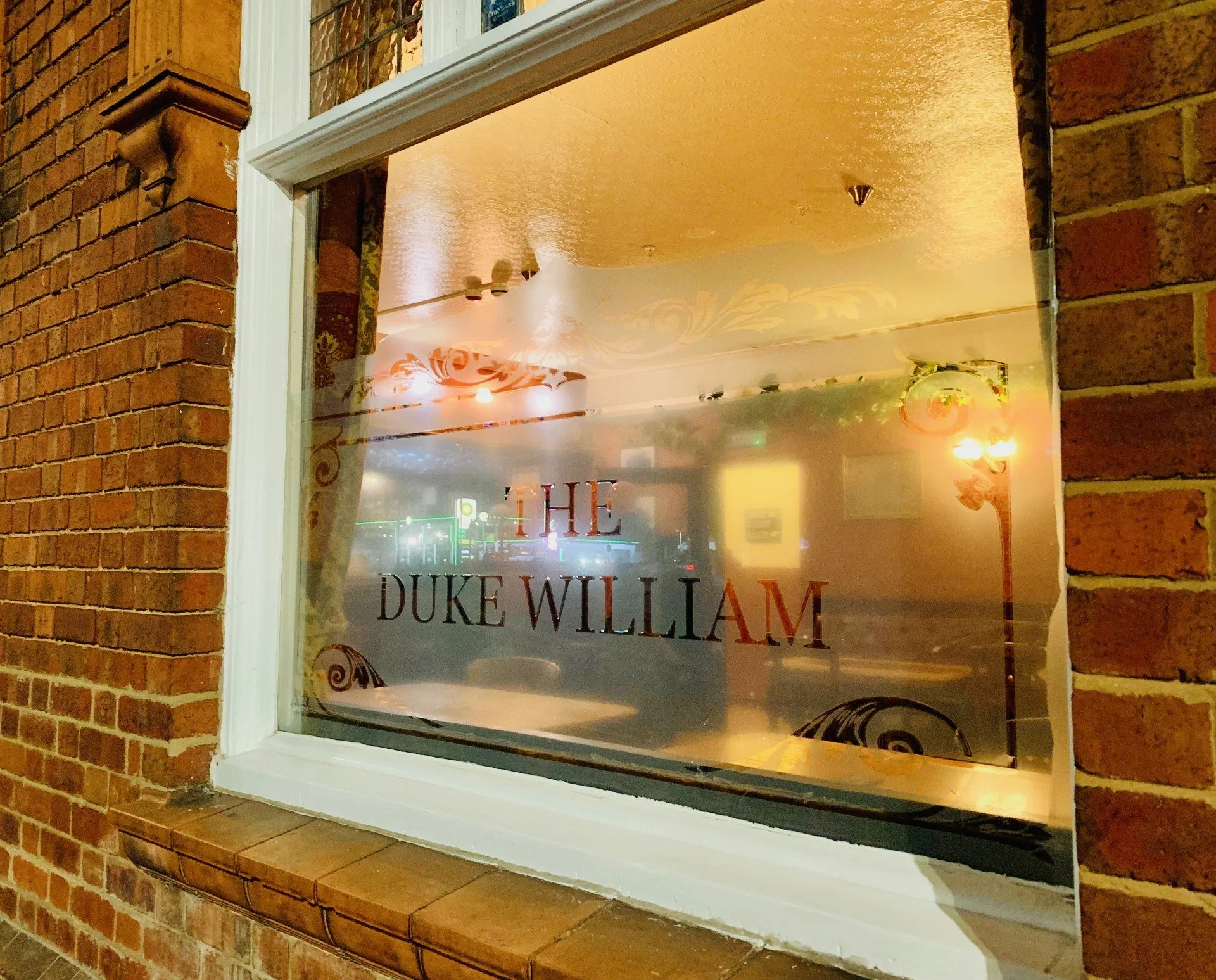
The Duke William pub in the village of Stourbridge, England, a 35-minute train ride west of Birmingham, is an Edwardian-era structure located on the high street next to a chip shop. It is a quintessential “local,” where you might meet a friend for a pint or bring your kids for meat pies when you don’t feel like cooking. I am an American musician, presently living in Seattle, born and raised in Chicago, of Southern Italian ancestry. One could say, reasonably, I’m a bit out of place at The Duke William. And yet, here I am on a warm summer evening, trying to belong.
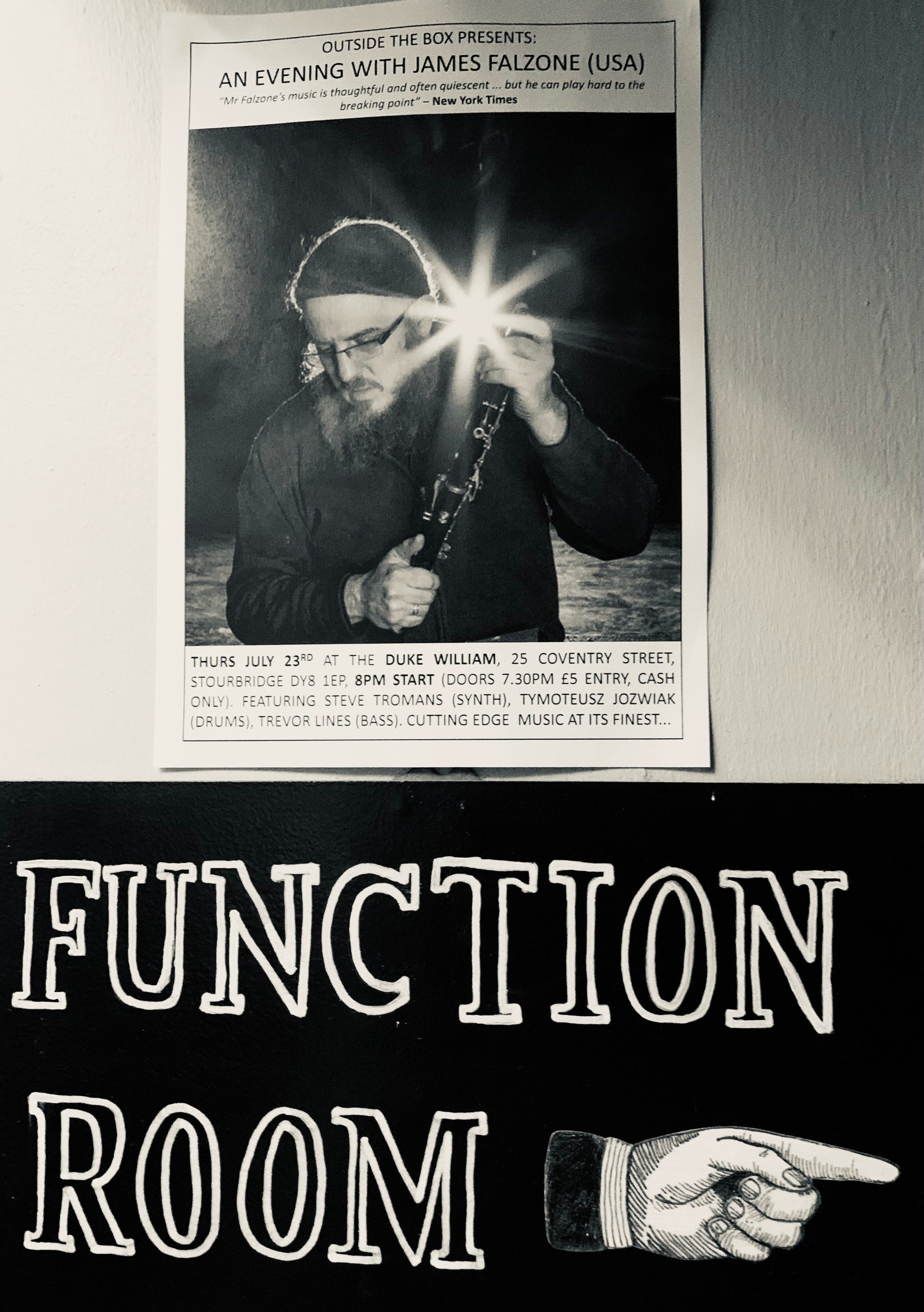
I’m in Stourbridge as a guest artist on the Out of the Box concert series, held each month at The Duke William, curated by pianist Steve Tromans, whom I met several years ago in Chicago. It is the start of a two-week journey for me where I’ll play concerts across England and Scotland, then head to Italy to teach and perform at a festival. It’s exciting, but tonight I’m tired and jet-lagged from yesterday’s international flight.
Other than Steve, I have never met the musicians I am playing with. We say hello and chat about musicians we know in common, an opening gambit in the process of belonging. There is a drummer, an acoustic bassist, Steve on piano, and me on clarinet. The music is completely improvised, meaning we have no scores or tunes to reference, and we are making up the compositions through the process of performing them.
All-improvised music may sound like a recipe for sonic chaos, and, indeed, this happens. But not tonight. The musicians I’m performing with are stellar: deep listeners who know how to move from background to foreground, always paying attention to the aggregate, never lost in their own song. We arrive tonight via different paths, some more grounded in jazz, others in contemporary classical music. There are moments when the music sounds like 1950s Miles Davis, others when it resembles the fragility of Erik Satie. It is a United Nations of sounds and musical reference points.
I’ve performed, studied, and taught improvisation throughout all my professional life and have come to believe it to be a study in belonging. In any expression of improvised music, I must attend to the ebb and flow of which sounds, made by whom, are best in support of the moment, and allow that attendance to dictate my actions. I am in constant service to the whole, never to the self. Through an important dichotomy, however, my own musical personality is essential to aesthetic success. Just as in our relationships with those around us––family members, co-workers, neighbors––improvising with other musicians is a balancing act between expressing identity and upholding community.
Allow me to describe a moment from tonight’s performance as an example:
I’m playing virtuosically, where my identity as a clarinetist is center stage. The pianist joins me in a similar fashion, cajoled by the high energy of what I’m offering. The bass player, after a few moments of listening, takes out his bow and begins to play long, slowly arcing melodies. The contrast is startling, as if he’s saying, “I hear your virtuosity, but I’m not interested. Let’s consider a more contemplative way.” The drummer follows the bassist, creating shimmering sounds on his cymbals that do not keep pulse as a drummer often does but instead stretches a canvas onto which the bass melodies overlay. For a moment there are two camps: the extroverted sounds of clarinet and piano against the reflective sounds of bass and drums. Neither side belongs to the other.
Soon, I’m compelled to stop my freneticism and give over to lyricism, moving to longer tones similar to the bass. I’ve chosen a supportive role. The pianist moves to silence, as if to say, “There is nothing I can add to this,” which is also a supportive role. The drummer shifts from shimmering colors to a quiet pulse that eventually helps us transition to a new section of the piece. All of this transpires in roughly two minutes of time, with the audience witnessing. We all belong to this moment, performers and listeners alike, and though no words are spoken, the complexity of the self-organizing that just transpired is felt by all.
A moment of improvised music like this is analogous to how we navigate contemporary life, in which we can feel fractured and distanced from one another, sometimes purposely. Just yesterday, former New York City Mayor Rudy Giuliani went on a maddening, falsehood-infested Islamophobic tirade against current NYC Mayor Zoran Mamdani. Like so much I hear across the political spectrum, Giuliani’s rant struck me as an improvisation gone horribly wrong. There was no empathy, no deep listening, no silence, no attempt to belong to the other. If a similar lack of understanding of the other was present at The Duke William, the music would have been stilted, unable to convey the qualities of beauty and meaning many of us look for in music. I may have never chosen the supportive role mentioned above, lost in my own self-centered song. Importantly, as an outsider, I would not have succeeded in belonging to the community and likely would not have been asked back to the series. There would have been consequences—a standard to which politicians are rarely held.
I’m now back on the train heading out of Stourbridge to Birmingham. It’s after midnight, and I sit next to a gentleman who tells me he was present at the concert. He expresses real appreciation for the music he heard and has a hard time believing it was fully improvised: “You all seemed so in sync, it was like a flock of starlings in murmuration.” His metaphor is an apt one; the starlings belong to one another, but each brings something distinct to the flock. What we witness in murmuration, what transpired at The Duke William, is a way of belonging.