Praying With Our Feet: When the Earth Groans and Wage Workers Tremble
A faith-rooted reflection on gender, climate, economy, and moral witness
by Sheena Foster
In Washington, D.C., the snow comes down quietly at first. It hushes the city. It blankets the sharp edges: the curb cuts, the cracked sidewalks, the marble steps of institutions that were never designed for all of us. The snow can make everything look clean, even when the systems beneath it are still polluted.
As a Black woman and seminarian, I have learned to pay attention to attempts to cover the truth. I have learned to listen for what is beneath the surface. I have learned that in this country, there is always a storm. Sometimes it is meteorological. Sometimes it is political. Sometimes it is moral.
The “snowstorm” that hit the nation’s capital was a disruption, yes. But it was also a sign. A reminder that nothing is stable anymore. Not the climate. Not our economy. Not the fragile networks holding together the lives of working families across this country.
And yet, as the snow fell, outrage rose.
Sometimes two things can spark moral awakening at once: the visible interruption of a storm, and the unbearable rupture of violence and injustice.
On January 29th, 2026 the National Council of the Churches of Christ in the USA (NCC) joined a powerful coalition of faith-based organizations and people of faith from across the country in Washington, D.C. for an act of moral witness, praying with our feet and taking bold, collective action. We came together not just to speak, but to show up. Not only to lament, but to make the kind of holy noise that refuses to let injustice have the last word.
This witness unfolded in a moment of intensifying national grief and outrage following killings linked to federal immigration enforcement actions, including the deaths of Alex Jeffery Pretti, Renée Nicole Good, and Keith Porter Jr., U.S. citizens fatally shot by federal immigration agents. These tragedies have deepened a national crisis of conscience. They have exposed how cheap life has become in the public square, and how easily violence is justified when the suffering is politically convenient.
For people of faith, a crisis of conscience is never abstract. It is personal. It is political. It is embodied.
That is why leaders from multiple denominations stood shoulder to shoulder in moral witness. Many chose civil disobedience and were arrested. Their arrests were not for spectacle: they were a form of sanctified resistance. A reminder that faith is not meant to stay neat and inside the sanctuary. Sometimes faith demands that we move our bodies into the street.
To pray with our feet is to acknowledge the truth: faith that is not embodied can become domesticated, safe, sentimental, and distant. But faith that moves is faith that refuses to accept injustice as normal.
The personal is political: whose bodies bear the cost? When we talk about the personal as political, we must tell the truth about whose bodies bear the greatest burden. In every generation, the most vulnerable bodies are placed closest to danger. This is not new for Black people. This is not new for women. This is not new for immigrants, for the poor, for those navigating systems that were never built with their thriving in mind.
Women’s bodies carry life, and women’s bodies also carry grief. Black women in particular carry the load of a nation that often praises our strength while refusing to protect our humanity. We lead households through uncertainty. We provide care to children and elders. We hold communities together through prayer and organizing. We show up for the church, for our jobs, for our families, even when we are exhausted and even when our needs are ignored by others.
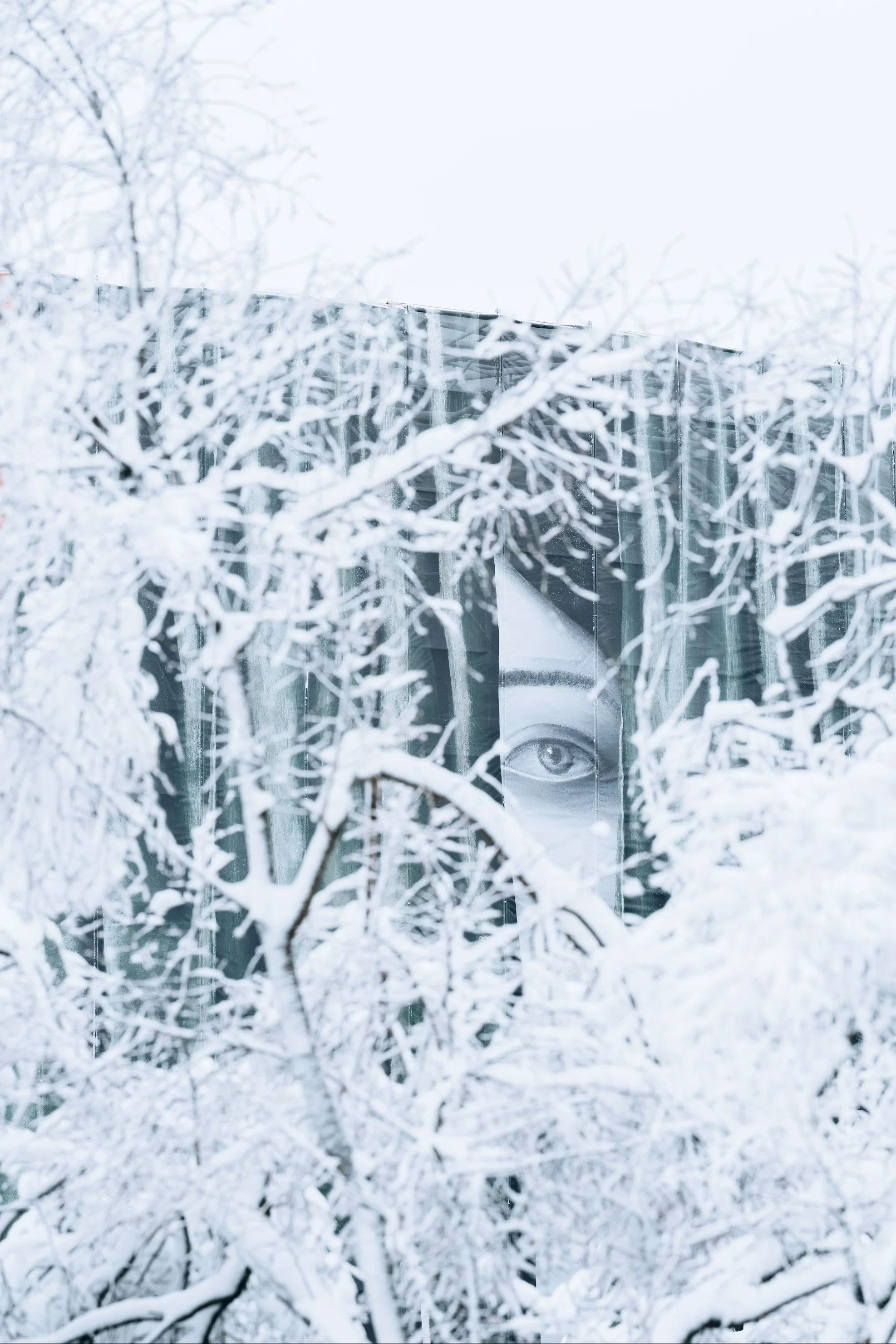
Image description: Snow uncovering girl
We do this while being concentrated in low wage service jobs, caregiving roles, and public sector work that is underfunded and undervalued. We experience storms not simply as weather but as threat. When the city shuts down: hourly workers lose pay, childcare collapses, commutes become dangerous. People risk their lives on icy roads simply to keep jobs that do not pay them enough to survive.
Scripture now comes alive in new ways. I hear the text speaking back. I hear it as witness. Romans 8:22 (NRSV) says: “We know that the whole creation has been groaning in labor pains until now.” The earth is groaning: creation is testifying. That groaning is not metaphor anymore. It is measurable. It is visible. It is happening on our streets and in our lungs and in our communities. Climate change is not only environmental. It is economic. It is gendered.
Our earth is reacting to our poor stewardship. Heat waves are longer. Floods are more frequent. Storms are harsher. Seasons are unstable. Communities are fractured. The climate crisis is no longer a distant warning. It is a cataclysmic unfolding. The snowstorm that brought Washington to a standstill was not simply an inconvenience; it was a revelation. Creation is testifying.
Environmental harm is moral harm. Ecological violence is spiritual violence. When corporations poison the water, when neighborhoods are redlined into hotter zones with fewer trees, when public infrastructure fails and communities are left to fend for themselves, we are witnessing not only policy failure, but moral failure.
The earth groans because we have normalized exploitation.
The economy is trembling and wage workers face a deeper crisis.
Creation is not the only thing groaning. Wage workers are too.
Across this country, millions of people are living one paycheck away from collapse. A storm closure can mean unpaid rent. One missed shift can mean food insecurity. One medical bill can mean debt for years. Families are not simply balancing budgets. They are balancing survival.
And in moments like this, the political decisions made in Washington reveal what kind of nation we are becoming. The Senate is expected to vote on a legislative package narrowly passed by the House that includes Department of Homeland Security funding. The moral question is not whether enforcement can be funded. The moral question is: what does our nation choose to fund, and whose lives does that funding protect?
When public funding expands systems of enforcement while social protections erode, the result is not safety. It is fear. It widens the net of harm while leaving families without the basics required for human flourishing: stable housing, health care, quality education, livable wages, and dignity.
Faith demands witness: from prayer to public action. This is why the NCC and many others gathered in Washington, even amid freezing temperatures, even amid political backlash, even amid the personal risk of civil disobedience. Faith is not private when public policies determine who lives and who dies. Faith is not neutral when systems produce suffering. Faith is not complete when it ends at the altar and never reaches the streets.
The act of praying with our feet is part lament and part protest. It is confession and proclamation. It is the refusal to separate prayer from justice. We pray because we believe every human being bears the divine image. We march because we believe public policy must reflect moral truth. We grieve because lives have been lost and communities have been wounded. We organize because grief without action becomes despair.
In a democracy, silence is also participation.
Our faith calls us to build toward social flourishing. In the midst of the storm of national outrage, the question is not only what we oppose, but what we are called to create. Social flourishing requires more than reform. It requires moral reimagining.
A flourishing society is one where mothers do not fear immigration raids at school pick up, where workers do not fear bankruptcy because a storm shuts down their shift, where communities do not fear poisoned air and water, and where young people are not trained to accept violence as normal.
Faith communities cannot outsource justice to politicians. They must shape the moral imagination of the nation through teaching, organizing, public witness, and courageous truth telling. The work ahead is spiritual and structural. We must preach and we must protest. We must pray and we must legislate. We must cultivate compassion and demand accountability.
To pray with our feet is to declare: we will not be numbed. We will not be silent. We will not accept injustice as the final word.
Because the earth is groaning.
And so are the people.
And faith, real faith, moves.