
Religious Responsibility in the Reality of American Authoritarianism
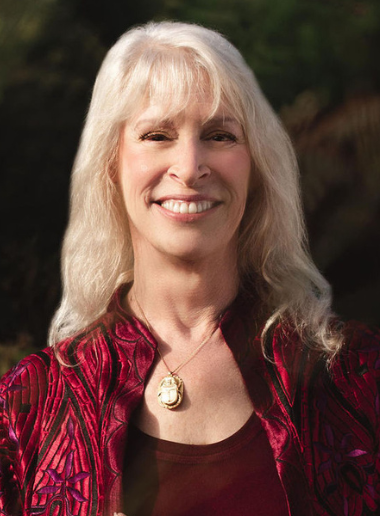
by Phyllis Curott J.D. Rev. H.Ps.
“First they came for the Communists… then they came for me—and there was no one left to speak for me.”
These words, written by Lutheran pastor Martin Niemöller after the Second World War, are not just an act of contrition. They are a warning about silence—about the cost of waiting until injustice reaches our own door.
Today, the danger Niemöller named is no longer abstract. It’s no longer safely historical. It’s here, at our neighbors’ doors, and it is accelerating.
Without warrants, immigrants and citizens are seized from their homes and off the streets by heavily armed, masked Federal agents. The shootings of Renee Good and Alex Pretti in Minneapolis are tragedies that brutally expose what happens when political extremism, dehumanization, and authoritarian rhetoric move from speech into action, from ideology into humanity. They force us to confront a sobering truth: when violence becomes normalized, when fear becomes a governing tool, no one is untouched.
But Minneapolis offers us something else—something vital. In the aftermath of violence, the state and local government are standing up for its citizens, and citizens are standing up for each other. Faith leaders are crossing denominational and theological boundaries to stand at the front lines of peaceful protest. Vigils are being held, mutual aid networks are being mobilized, neighbors are bearing witness. Compassion, courage, and love are embodied in action. Environmental justice groups, labor advocates, women’s organizations, racial justice, and religious communities are standing together—not because they agree on everything, but because they understand something essential: flourishing is collective, or there is none.
This is where the personal becomes political.
In traditions like my own, Spirit is embodied by Creation. The world is understood as a living web of relationships. Harm to one strand reverberates through the whole and awakens restorative action. Justice is not an abstraction; it is a sacred practice of care for others, communities, land, and future generations. From this perspective, authoritarianism is not merely a political system. It is a spiritual pathology. It severs relationships. It thrives on domination rather than reciprocity, fear rather than belonging. Cruelty is the point. It is unnatural.
Across the United States, we are witnessing the rise of a movement integral to autocracy, cloaking itself in religious language while betraying the moral core of religion itself. Under the banner of “faith,” fundamental freedoms are being narrowed. Under the guise of “religious liberty,” the rights of people of color, immigrants, women, LGBTQ+ people, and religious minorities are being stripped away. Economic inequality is sanctified as destiny rather than confronted as an injustice, and the natural world is objectified and treated as expendable.
This is not accidental. Authoritarian movements require an enemy. They depend on “the other”—someone to blame, to fear, to exclude. Religion, when distorted, becomes a powerful tool for this project. It can be weaponized to demand obedience, silence dissent, and sacralize hierarchy.
Religious leaders face a defining choice.
We can remain silent and tell ourselves that politics is not our domain, that neutrality is wisdom, that speaking out risks division. Or we can tell the truth: silence in the face of injustice is not neutrality. It is acquiescence. It is consent.
Every major religious and philosophical tradition teaches some version of this truth: human dignity is not conditional. Compassion is not selective. Justice is not optional. When religious leaders lend their voices—or their silence—to movements that dehumanize, they do not protect faith. They hollow it out.
Conversely, when religious leaders stand together across differences, something remarkable happens. We saw it in the civil rights and anti-war movements of the 60’s. We see it in Los Angeles, Chicago, and now Minneapolis. We see it wherever faith communities partner with organizers to protect civil liberties, democracy, and voting rights, defend our neighbors, preserve reproductive autonomy, care for Mother Earth, and insist on an economy that serves life rather than exploits it. We see it when interfaith coalitions refuse to let grief or fear collapse into hopelessness and instead transform these feelings into action.
This is what spiritual leadership looks like in an age of authoritarianism. It is not about capitulation. It is about courage. It is not about purity. It is about solidarity.
As a First Amendment attorney, I know how precious and precarious freedom of speech, press, assembly, and religion are. These liberties cannot survive when dissenting voices are punished, erased, or when the state elevates one worldview above all others. They cannot survive when truth is murdered by lies. Freedom depends on the conviction that no single person or tradition has the right to rule, and that all have the responsibility to protect one another’s freedom.
As a Wiccan priestess, I know that joy, care, and reverence are acts of resistance. To respect the land, to gather community, and to insist on beauty and meaning in the face of cruelty—are not retreats from political life. They are refusals to let fear constrain life.
We are at a crossroads. The personal losses we grieve today are warnings about the collective future we may inhabit tomorrow. They are calls to choose relationship over rupture, courage over comfort, and solidarity over silence.
To the readers of The Interfaith Observer, and to the communities you serve: this moment is asking something of us. Not perfection. Not unanimity. But presence. Voice. Action.
If authoritarianism thrives on isolation, then our answer must be community. If it feeds on despair, then our answer must be hope made visible. If it seeks to turn neighbor against neighbor, then our answer must be a radical commitment to one another’s dignity, safety and wellbeing.
The personal is political because people matter. The personal is political because of what we choose to defend—now—will determine who is left to speak when the danger comes to our door.
May we choose wisely. May we choose each other. May we choose life.