




Several years ago I joined a small group of concerned people responding to a growing interest in appreciating and respecting the faith traditions of humankind. We developed home-based educational programs for small groups of interested people who know little if anything about religions other than their own. It began informally, spread by word of mouth, and now hundreds of workshops have been held.
The Language of Interfaith Conversation
Mindful interfaith language expresses our common humanity, builds relationships of respect and trust, and pursues peace.
Guidelines for Engaging in Productive Interfaith Dialogue
First, why are you involved with interfaith dialogue? Are you promoting an understanding of your own faith in an interfaith venue or promoting interfaith itself?
A ‘Dialogue of Life’ Approach to Interfaith Peace in West Africa
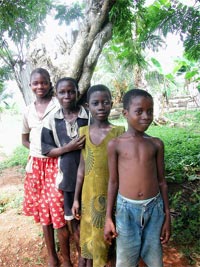
Children in Ghana are being raised in a ‘dialogue of life’ that makes religious differences a source of friendship, not conflict. [Source]
A religious revolution has emerged in many local African communities and nations as a whole in the last one hundred years or so. Within the period, various religions have come to live in closer proximity with one another than they had during the previous century. African towns and cities now collaborate with churches and mosques and to a lesser extent traditional/primal religious activities.
Subsequently, at the present time, people of different faiths encounter one another more often in both structured and unstructured ways. For example, in many homes across Ghana and the Gambia, it is common to find followers of African indigenous religions, Christianity, and Islam – with all the different groups of Christianity and Islam living together. By extension such relations are carried to the larger village or town community.
The Frightening Next Step in Interfaith Dialogue
There are two kinds of interfaith programs: the safe and the frightening. The safe leave us untouched; we are the same persons going in as we are coming out. The frightening leave us not only touched but transformed; we are different coming out then we were going in.
From hatred to healing
Who was not stunned by the recent events in Norway, as news of the bombing in Oslo and the subsequent massacre of some 69 young people at a camp on an island nearby broke on the world? As details followed, it appeared that the man responsible for the attacks believed he was fighting for a "Christian Europe" against Islam, Marxism, and multiculturalism.
An Interview With Diana Eck
Dr. Diana L. Eck, Professor of Comparative Religion and Indian Studies at Harvard University, is a leader in interreligious studies and interfaith bridge-building. Her A New Religious America (2001) unveiled the diversity that has changed forever America's religious makeup.
Who Cares About Living Peacefully?
A TIO Editorial
Who Cares About Living Peacefully?
by Paul Chaffee

Interfaith dialogue is sometimes characterized as wine ‘n cheese talk-fests for progressive religionists. In fact, the interfaith movement is strongest in countries where people are at risk, though their stories don’t often get told. Preparing for TIO’s launch, we discovered the painting below, the work of at-risk children in Pakistan who yearn to grow up in an interfaith-friendly, peaceful land. TIO is a site where voices like theirs will be heard.
“Multicultural Harmony” was painted by Sara, 10, Zehra, 12, and Ayla, 11, students at Funkor Childart Centre for disadvantaged students in Islamabad, Pakistan. In a troubled world, their clear yearning for friendship and goodwill among the world’s races and religions shines like a beacon for the rest of us. The mural was painted under the guidance of artist Fauzia Minallah. Learn more about Funkor’s work and ways to support it at www.funkorchildart.com.