Grassroots Women: A Deep Potential of Love, Community and Power Toward the Better World We Need
by Ann Smith
I first heard the phrase ‘personal is political’ in 1985 in Nairobi, Kenya, at the UN Third World Conference on Women. African women came in waves; they walked huge distances, traveled by buses, trains, and planes to demand their voices be heard. It was a breakthrough moment to witness for the first time a grassroots global women’s movement. The movement was presented both in the formal UN Conference Hall and outside in the Forums. We listened with open hearts. We shared best practices and realized we had more in common than what divided us, no matter where we lived. When Maureen Reagan, representing the US Government delegation, said the political was not personal, 10,000 women said it was.
Another breakthrough moment came to me outside of the conference when I witnessed an economic model that could eradicate poverty worldwide. Our Anglican delegation, the first delegation to attend a UN conference as an official NGO with consultative status, was invited by the International Anglican Mother’s Union to visit a remote village on Mt. Kenya. The Mother’s Union, headquartered in London, is one of the largest women’s organizations in the world. What I experienced in this village I will never forget or stop talking about as one of the best examples of women’s economic empowerment.
The village women had built a bakery from bricks made from their terracotta soil. Through selling their baked goods under the management of Mother Union members, the village women earned their own money for the first time. When the male leaders in the village demanded they turn over the money, the women refused, telling us that the men would use it to build another beer parlor. The women declared with pride and fortitude that they would build a health clinic. When women raise their own money or are given a grant or loan, they give back to their communities building prosperity for all.
Ten thousand women’s small groups and organizations formed in Kenya over the next decade. This should have made the headlines in every news service throughout the world, but it didn’t.
Eventually the momentum of the grassroots women’s movement brought 40,000 women to the UN Fourth World Conference on Women in Beijing, China in 1995. The opening ceremony was held in an outdoor stadium that was overcrowded and overflowing into the streets. Instead of feeling mistreated, we sang in unison a simple, but powerful song that rings in my heart even today, ‘Keep on moving forward, Never turning back.’
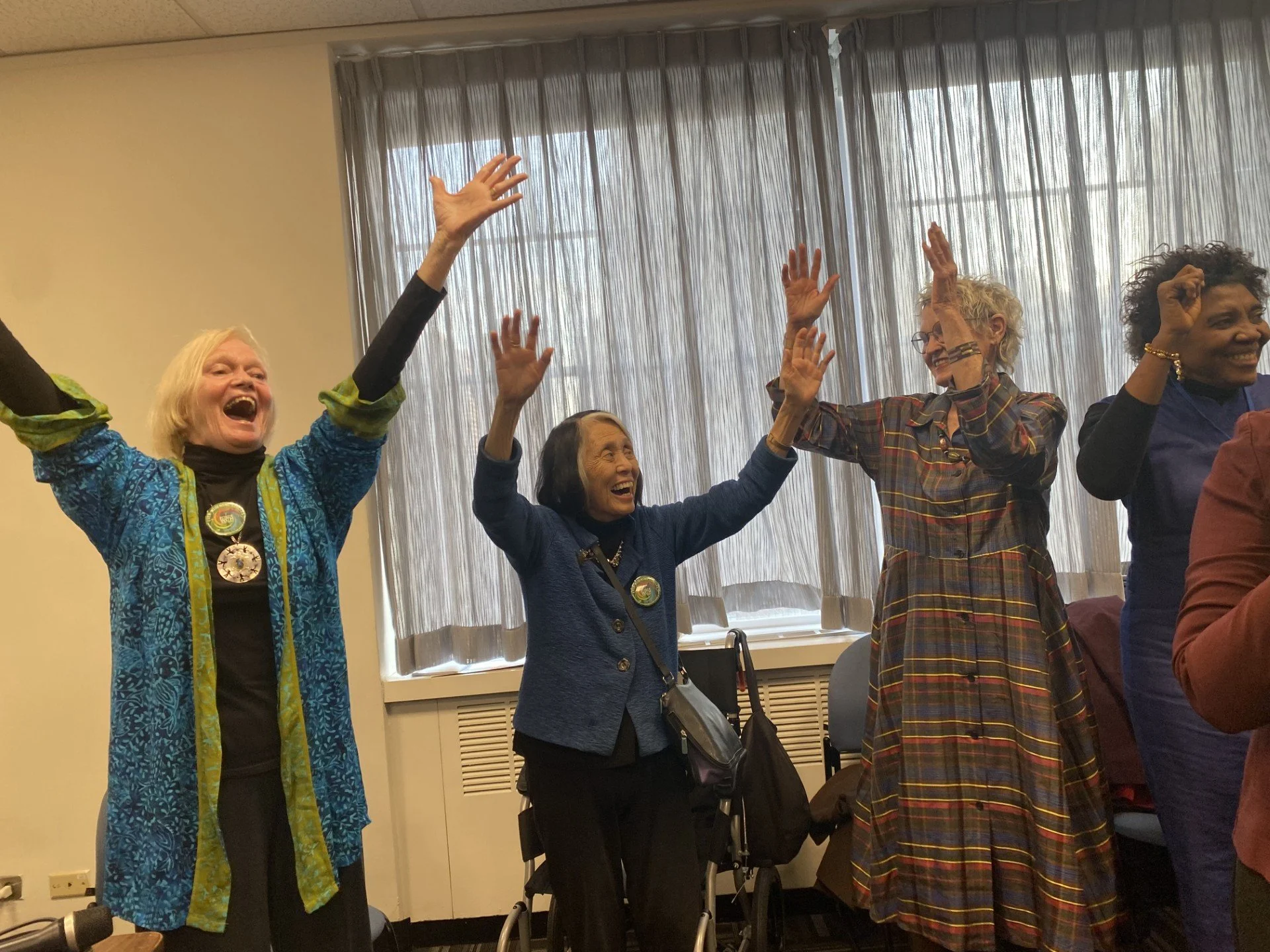
A ‘concerned’ Chinese government offered Forum options in Huairou, a small town thirty miles away in a space woefully inadequate for an international gathering. But making do is something women have mastered out of necessity for thousands of years. We had come from around the world to improve the status of women and girls everywhere, so we gathered in Huairou with personal stories of hardships and best practices. Women’s issues were brought to life in songs, dances, drama, art, plays, and, of course, conversations. We did water ceremonies, peace rallies, a Congo line that grew as hundreds of women joined in dancing around the tents, kiosks, and grounds.
‘Women’s rights are human rights,’ declared US Representative Hillary Clinton at the closing of her official UN speech in Beijing, shattering barriers with her statement. What had been a rather business-as-usual session erupted into applause and a rallying cry for justice. The message was quickly relayed to Betty Friedan in Huairou, where women burst into cheers and laughter, one of our best weapons against patriarchy.
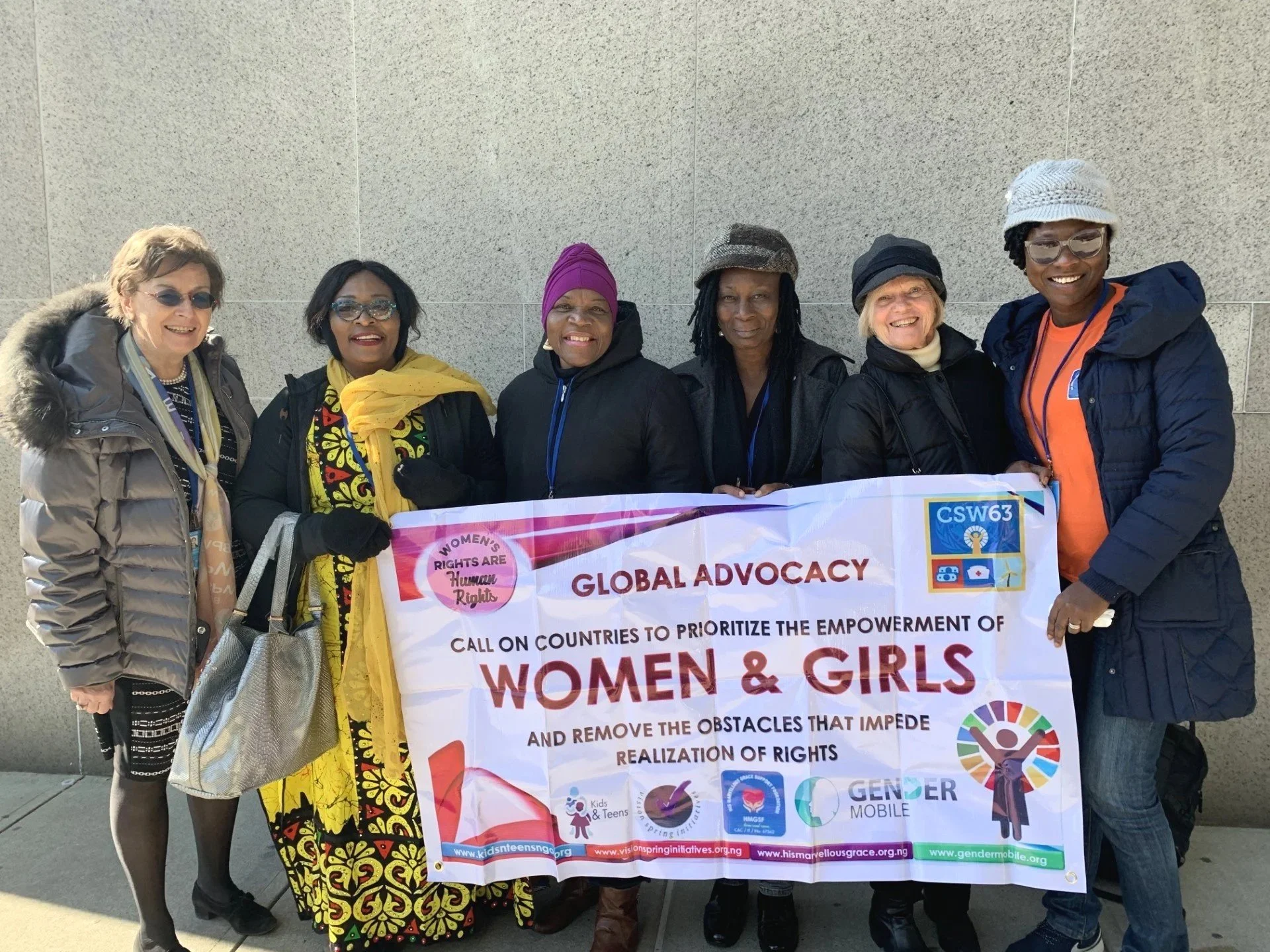
The Platform for Action generated by the UN Fourth World Conference on Women was approved by every member state and continues to be foundational for improving the lives of women and girls globally. Grassroots women from every corner of the world to this day actively strive to address the issues they face, including advocating for the elimination of poverty and violence, education and health, and equality and participation in decision-making, dignity in the media, climate justice, and more. Imagine if governments would create policies, laws, programs, and funding to support these efforts. We might not be living in the nightmare of today’s economic, environmental, and violent political crises.
Women continue to contribute in the people’s movement that resists tyranny and co-creates sustainable solutions. Our news is not told in the mainstream. Instead, it is hidden, almost forbidden, because it conflicts with the shared illusion of patriarchal and hierarchical leadership. The largest movements in human history are made up of grassroots women’s organizations. These organizations are self-governed, community-focused, inclusive, and thrive on a dynamic where information, power, resources, and leadership are shared. Because women are motivated by the ‘personal,’ they are found on the frontlines of climate and health crises, poverty, war, and economic issues where they continue to accrue the knowledge, political will, and wisdom needed to offer sustainable solutions.
The women, indigenous peoples, and environmentalists who attended COP30 in 2025 in Belem, Brazil are not relying on governments who are beholden to the fossil fuel industry to address the climate crisis. Instead, they have initiated the Global Ethics Stocktake (GES) meant to initiate self-managed community conversations on caring for creation. The power of love and being in harmony with nature is meant to lift up moral values, and inspire boycotting, protesting, buying healthy and sustainable foods, as well as voting for those who support the greater good.
The Women’s Task Force of the Parliament of World Religions will hold a GES online workshop March 11, 2026, in New York at the UN Commission on the Status of Women. Information on GES and how to host a circle conversation will be presented. Our goal is that each GES circle will inspire and teach others to host circles and exponentially spread possibilities for resistance, resilience, regeneration, and renewed health throughout the Earth’s human population.
As old structures are being torn apart, democracy, environmental protection, and human rights are being violated. Each day, grassroots women continue to step forward by instilling a moral imperative to share resources, give to those in the greatest need, and care for all life on Earth.
Women’s leadership, in partnership with men, has the potential for co-creating a world where all life thrives. Supporting grassroots women and their organizations by empowering their voices at decision-making tables, is not only the right thing to do but is the best means we have for saving humanity and the planet.