Divine Connections
by Angela Weber
As a reward to myself for reaching a mature age, I returned to my studies. I took a specialization course on third sector management, and then completed a Master’s degree in Anthropology all with the objective to better understand the women and their communities within a very poor region in northeast Brazil called Chapada Diamantina. During a 10-year work period there, I found that those women had an approach to their community and its wellbeing that seemed sacred to me.
Afterwards, living in Verona during the pandemic, I realized that what I experienced in northeastern Brazil was a common thread in many women everywhere. What I’ve come to believe is that there is a sacred connection of some kind that can be encountered wherever we are, and it has nothing to do with culture, language, or education. It’s a kind of willingness to help, a concern for community that surpasses borders. It seemed to me that it must live within women’s unconscious memories.
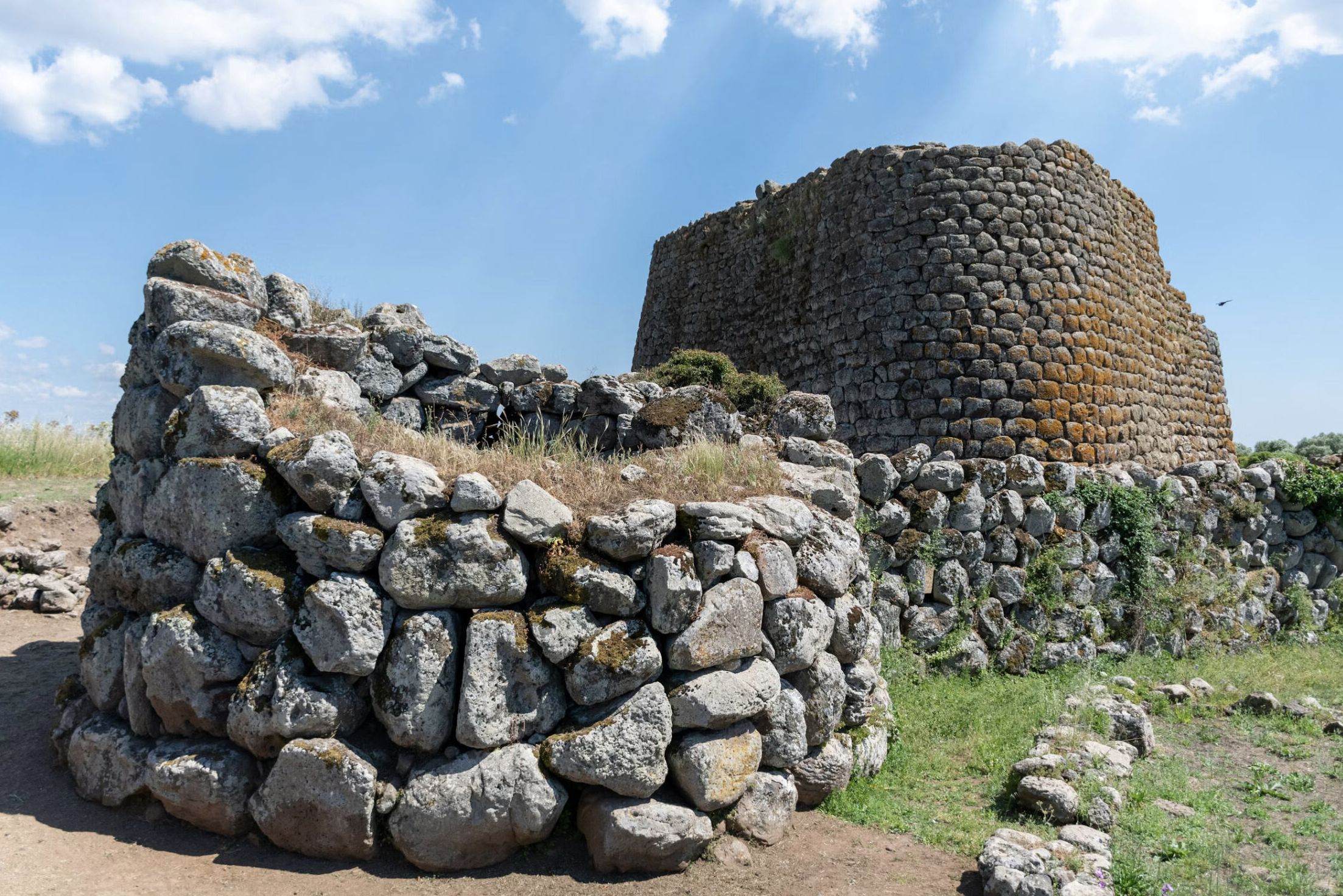
With this realization, I began studying the Goddess cosmologies, as a world vision based on culture and its values, from as far back as Neolithic times. That is how I became acquainted with the incredible Nuragic civilization that lived in Sardinia from 3000 to 1800 BC. Although they left no written records, recent archeological findings define them as equalitarian societies, connected with the Goddesses' cosmologies by the testimony of their incredible architectural monuments. The Nuraguic civilization was NON hierarchical. The monuments they left are a testimony of a different kind of societal order. And studying authors like Gumbutas and Goettner-Abendroh, I could start to envision a non-patriarchal social order, based on the same values that I had encountered among the women in Chapada Diamantina, then in Verona.
What is clear from recent archeological research, thanks to a rise in women’s perspectives in that field, is that these Goddess societies seem to be based on an economy of reciprocity, not competition. Their social structures were circular, not pyramidal, based on equality, not hierarchy.
In these societies cosmologies Time was circular, not linear. The circle of life included the notion that the goddess had three aspects: the maiden (spring), the mother (reproductive age), and the crone (sage). Each represented an aspect of life and nature, while the crone had the power of death as well as that of nurturing new life, because new life always comes after death. Life was understood as a non-ending circle, and society’s structures were based on these principles.
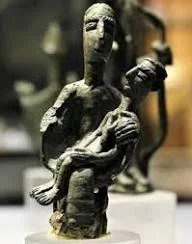
Another means of understanding our ancient past comes from the study of shamanism which predates all contemporary religions and generally is embedded in less patriarchal, more matriarchal societal structures. As the Goddess cosmology, it’s a cultural oral tradition to initiates, encountered all over the world, recently being studied and professed by anthropologists like PHD Doctors Michael Harner and Alberto Viloldo.
“Matriarchal societies are egalitarian and women-led spiritual societies with a world perspective focused on nature and human relationships with nature” (Goettner-Abendroth).
They are based on equality not only between genders, but also between all living things. They thrive from a gift economy without accumulation and always enough to share. They are a society based on values that incorporate the sacredness of all living things, defined by Gotten-Abendroth, as mother-centered, based on maternal values that guide the behavior of both men and women. Matriarchal society is built consciously over these values, aiming to meet everyone's needs with the greatest benefit to all.
This can be seen as biological reality transformed into cultural reality, with equality for all, where differences are respected and honored” (Goettner-Abendroth).
All these principles can also be found in Old World myth stories, incorporated with the aim of restoring cosmic order.

The essence of these myths is: the Goddess represents the cosmos while her consort, who is also a brother, represents the sun. The sun sets every day, but as winter approaches, it sets earlier and earlier, which is considered to be the action of some brother or rival who kills the Sungod-brother-consort. The Goddess desperately seeks him out until she finds him in the underworld. She then takes actions to restore him to life, and they proceed with a Sacred Marriage (spring occurs), and all life is restored till next year. The beauty of this myth can be traced to most known cultures of the Old World, and traces of these peaceful, nature-centered societies can be found today in many traditional cultures.
The Nuragic culture, some 4000 thousand years ago, thrived in the magical Sardinia, where today we find more than eight thousand of their monuments: big circular rock buildings. Some of them were rock chairs defining a space. What’s outstanding is that there are no higher or special chairs, all were alike with the same height, always circular, as the basic structure. Nothing found indicates hierarchy or an elite. There is no palace or special home. All the homes are circular and equal.
In addition, the culture’s legacy includes numerous monuments called “giant tombs” and “sacred wells.” The former are collective tombstones, and both formats express female reproductive organs. The sacred wells are stairways that lead to the water (life source). They are covered with rocks but have a circular opening that could represent the umbilical cord, the light to the dark world where all life begins. From the bottom of the well, you can walk up to the light and rebirth. This is represented by the outside rock walls in the format of vaginas opening in birth.
Shamanism of today and the creation myths that come from the past open a window that helps us understand these egalitarian societies that were part of our cultural evolution. They helped me understand what the women of Brazil were still holding sacred in their communities. women all over the world today are dedicating themselves to their communities and the wellbeing of others, telltale signs of Goddess cosmologies. Being caring and nurturing towards all life on Earth is intrinsic to women: a sacred thread throughout human history.
Even inside the dogmas of modern religions, the attunement to nature and to all living beings can be felt as part of the seasonal movements and features of everyday life. It’s still so rooted in us that it seems natural and basic to be part of the Earth, the cosmos, and all living things. It feels impossible to thrive without all the life forms around us or with us as equals.