From Seattle to the Sierra Huasteca: Building Relationships via a Community-Engaged, Jesuit Research Partnership
by Amanda Heffernan
Since the summer of 2024, I have had the privilege of partnering with Radio Huayacotla, a Jesuit-founded indigenous community radio station in the Sierra Huasteca of Veracruz, Mexico, on a community-engaged project about the impact of government health policy on childbirth and midwifery in the region. For me, the road to this partnership was paved by synchronicity and shared values, in the context Seattle University’s (SU) Jesuit character. As a non-Catholic feminist midwife committed to migrant and reproductive justice, my relationship to Seattle University’s Jesuit character can feel complex, containing deep alignment with many aspects of Catholic social teaching, especially in relation to solidarity with those most marginalized, alongside differences, particularly in relation to reproductive rights.
When I returned to Seattle from Arizona in 2021 to take a job at SU, I hoped to find a campus community supportive of the migrant justice activism and accompaniment work I had been doing in Arizona. In the spring of my first year of teaching, I heard fellow faculty member, Audrey Hudgins, speak about migrant justice on a panel and sought her out afterwards. By the end of our first lunch, I had agreed to co-lead a student immersion trip to the U.S.-Mexico border, and our dynamic friendship as thought partners, co-instructors, and co-authors was born.
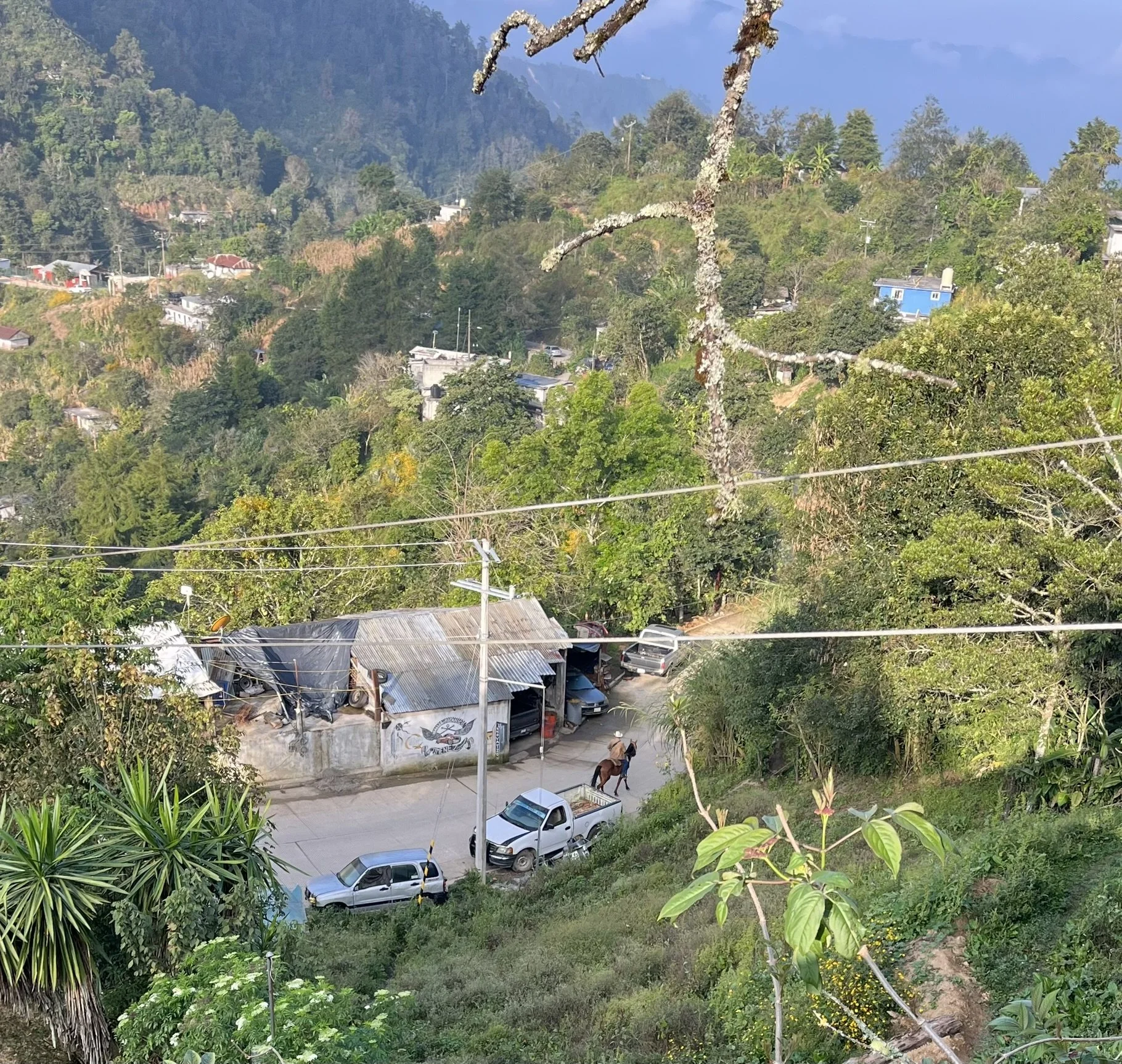
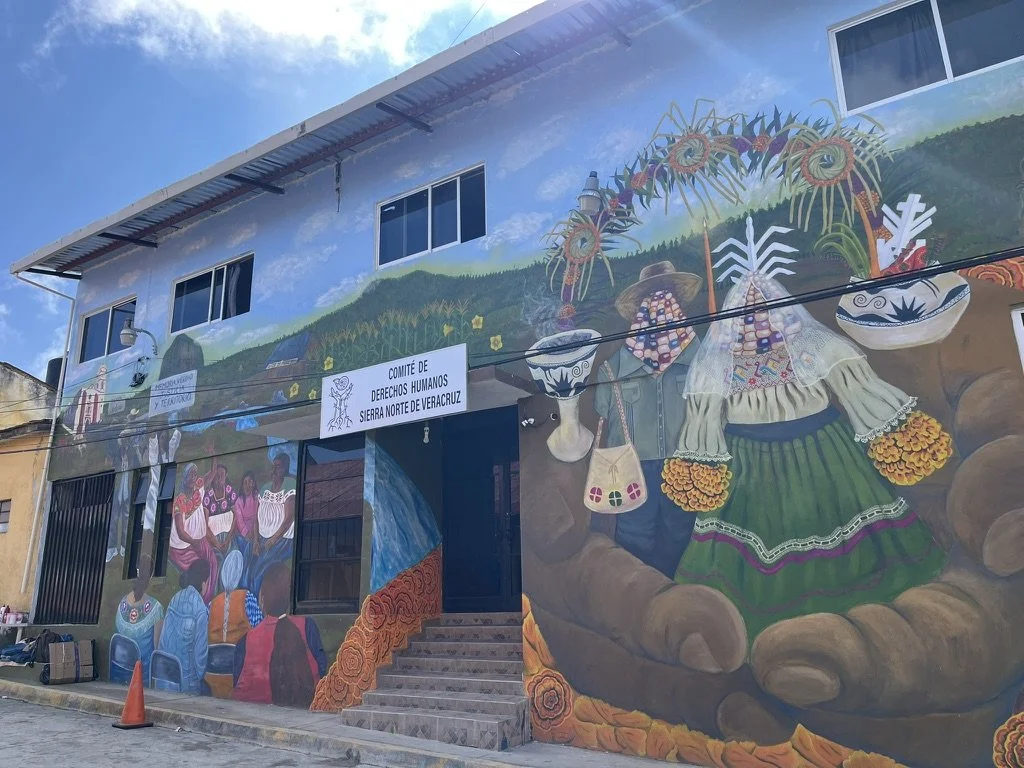
It was Audrey who gave me the word “accompaniment,” – grounded in Catholic traditions of walking alongside the marginalized – as I reflected on the solidarity work I had done with asylum seekers in Arizona. Audrey and I later explored our experiences with asylum accompaniment in an auto-ethnography that was published last year. It was Audrey who first brought me to Huayacocotla and introduced me to the team at the radio station, with whom she had been collaborating for the last five years on a community-engaged project about the impact of the H-2a agricultural visa program.
During our first meeting in Huayacocotla in the summer of 2024, as soon as I introduced myself as a midwife, staff members began sharing their perspectives on midwifery and childbirth. Angie, a Ñu Hu-language radio presenter, spoke movingly of the vocation of midwifery as a sacred gift from the ancestors, empowering indigenous parteras (midwives) to provide culturally grounded care using traditional knowledges including sobada (massage) and herbalism. Government restrictions, however, have forced many midwives underground and led to a decline in midwife-attended home births. Padre Alfredo, a beloved Jesuit advisor to Radio Huayacotla, explained that Veracruz’ mandate for all births to occur in regional government hospitals that provide a higher level of care means that indigenous women from remote areas must travel weeks in advance of their due dates to await labor in albergues (hostels), often leaving older children behind. Mónica, the radio station’s coordinator, described the difficulties indigenous women face in the hospital system, including language barriers, obstetric violence, and contraceptive coercion. The team said they had been looking for opportunities to address these issues for some time. We decided to collaborate; as a qualitative researcher and midwife, I would join the team to help design and carry out a research plan to inform the Radio Station’s future advocacy and cultural preservation efforts.
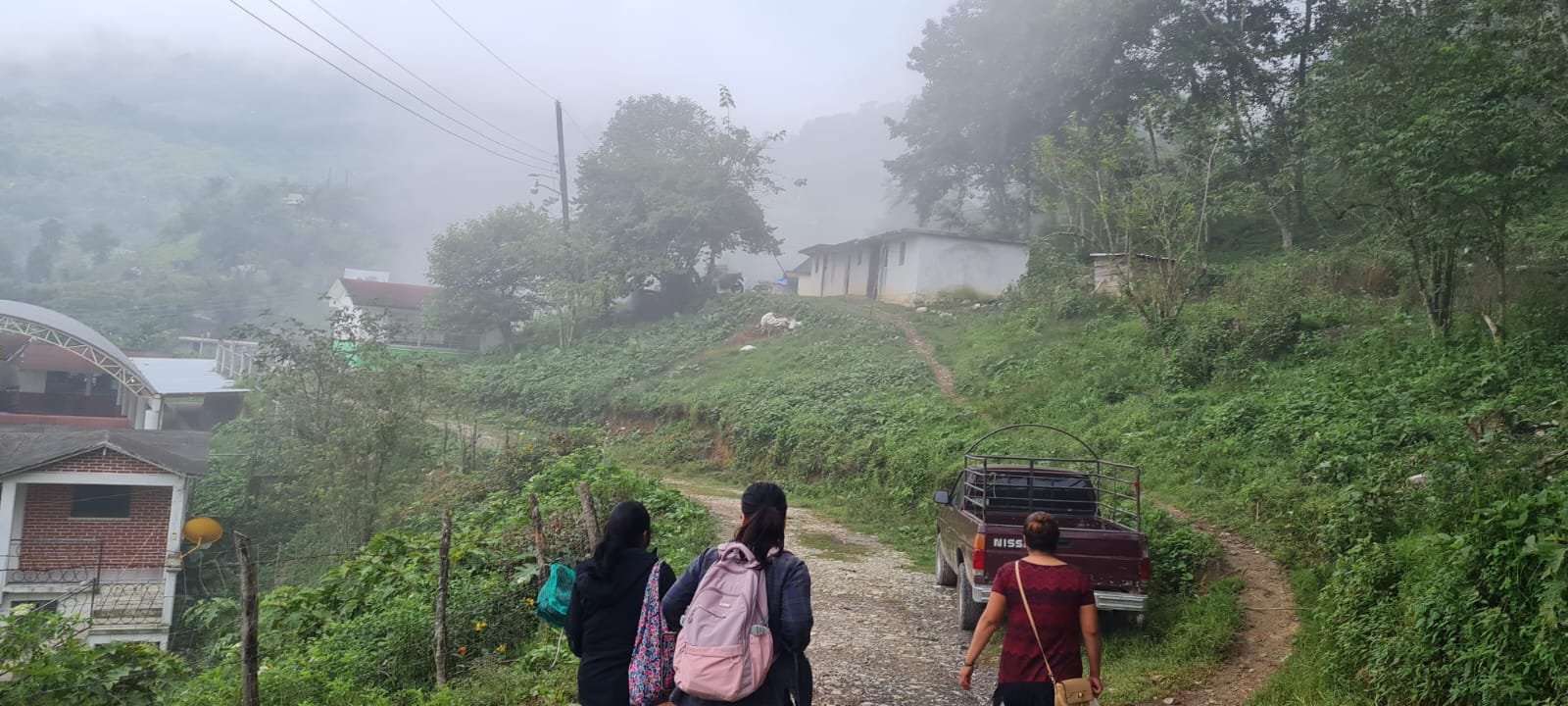
After a year of Zoom meetings, I returned to the Sierra for our first week of fieldwork in July 2025. As Angie, Lulu (a Ñu Hu health promoter and director of the radio station’s hostel), Romina (a Jesuit Volunteer Service intern turned radio station employee), and I traveled through the mountains talking to women and midwives, I experienced many moments of slightly surreal wonder. One day in the community of Las Canoas, I watched women gather for a focus group we had convened, each with a small bucket of tacos or quesadillas to share, neatly wrapped in embroidered cloth. Children played around the edge of the circle of plastic chairs as dogs and chickens ran underfoot. Just as the discussion was about to begin, a thick fog rolled up the valley, obscuring the houses and cornfields stretched out below us. As tendrils of fog threaded coolly between us, mingling with the smells of wood smoke and coffee, I remember thinking incredulously, “Being here today is my job?” As an American outsider, the fact that my fellow research team members trusted me enough to bring me into the communities they served, where women trusted us and shared intimate testimonies about their pregnancies and births, felt like an incredible honor. I knew that I was here in part because Audrey had transferred some of the trust she had built with this team to me.
Later that night, we arrived at Lulu’s parents’ home in the small town of Ayotuxtla. We sat in her mother’s small, tidy kitchen, and watched her prepare fresh tortillas for our dinner. Lulu’s father had grown and harvested the corn for the tortillas in his steep, mountainside milpa (farmland). Maize and the milpas it is grown in, are central to the cosmovision of the peoples of the Sierra. Lulu’s mother had boiled and soaked the corn kernels in limewater and ground them into masa using a hand-cranked mill. As we sat and chatted about our day of field work and plans for the next, we watched her grind the masa finer on a stone metate (mortar and pestle), form balls of dough, flatten them in the tortilla press, and cook them over a wood fire, flipping them expertly with her bare hands. As we ate the tortillas straight from the comal (griddle) with a delicious stew of chicken and black beans (also grown by Lulu’s father), I realized that I was taking the earth of the Sierra, transformed by the labor of our hosts, into my body. It felt like a kind of communion.
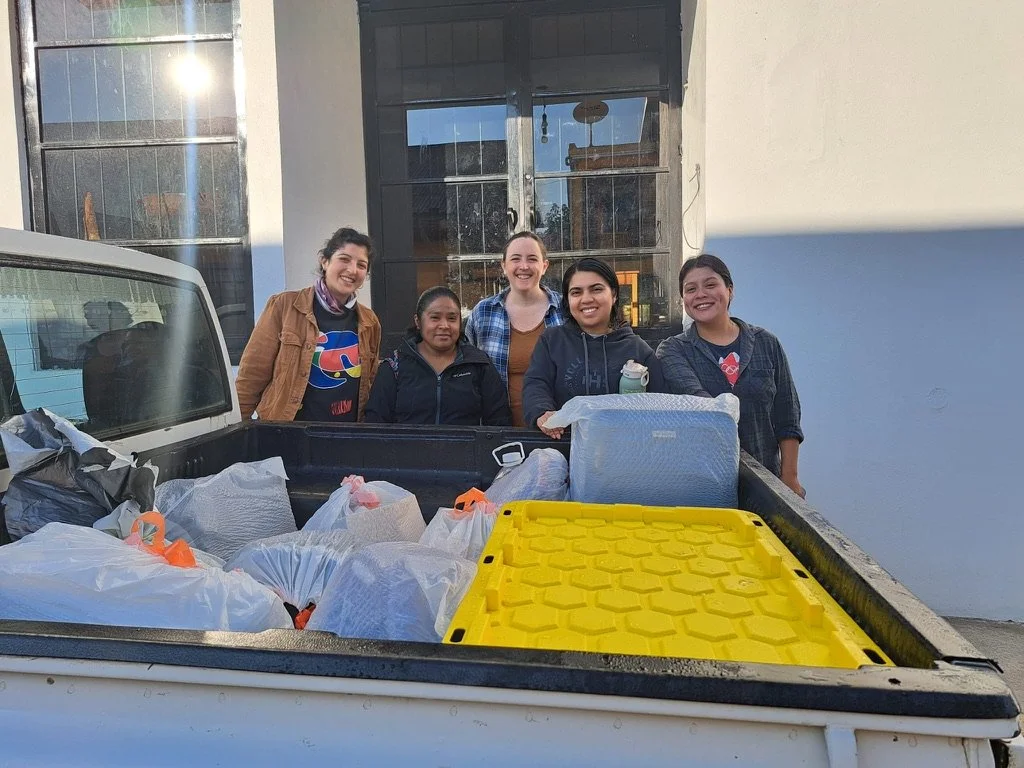
During our next week of fieldwork in late November, I found myself sitting in another kitchen, this time in a small community in the municipality of Texcatepec, sipping a mug of cinnamon-sweet café de olla (coffee from the pot) and listening to our host recount her experiences of giving birth in the 1980s and 90s, a time of intense cultural and economic transformation within the indigenous communities of the Sierra Huasteca. Her childbearing years were marked by the arrival of extractive industries, NAFTA, and increasing pressures to migrate out of the Sierra. At the same time, the neoliberal logic of new government health and social programs tied benefits to individual behaviors in ways that disrupted traditional collective family and community organization. Local people’s relationship to pregnancy, childbirth, and midwifery changed profoundly in complex relationship to these other cultural and economic changes. These changes were reflected in the reproductive trajectory of the woman we were interviewing as our host’s first baby was born at home, her second with a nurse in the local clinic, and her third in a hospital in the city. Angie sat by my side, recorder in hand, skillfully managing the interview using the list of questions we had co-created with the research team the summer before.
On the last day of fieldwork in November, we visited a government hospital in Metepec, Hidalgo. We stopped by the albergue and spoke with a young indigenous couple who had been awaiting the woman’s labor there for several weeks. The young man left the albergue each morning to find day labor in local tomato greenhouses or construction sites, returning at night. He needed money to send to the family members caring for their toddler and tending his milpa in their comunidad, four hours away in the mountains. The loss of community midwifery in the mountains cut this couple off from their community, their land, and their older child as they awaited their baby.
As we drove away from the hospital compound to return to Huayacocotla, we passed a billboard advertising “Glamping Temazcal”. During our fieldwork, older people had described traditional postpartum care involving rest, special foods, and herbal baths in a temazcal (sweat lodge). A woman’s husband would build the temazcal and tend its fire, while midwives and grandmothers would prepare the herbal baths. Across many interviews and focus groups, people we spoke with said that since birth has moved into the hospital, the temazcal is not used postpartum anymore. And yet, this indigenous practice is made available to tourists.
Later that afternoon, the research team met to plan our next steps. We mapped out a vision for hosting a community gathering later this year, where midwives and other traditional healers can come together to share knowledge with each other and their communities. There are plans to build a temazcal onsite, a gesture of cultural reclamation and community care. We are working on a report to support the radio station’s advocacy with regional health policymakers as well as an academic article. As we move from the information-gathering phase of the project to a more action-oriented one, I remain profoundly grateful for the opportunity to continue to partner with my Radio Huaya teammates as they live out their mission to accompany families in the Sierra.