




The first class of a new semester is always magical for me: a clean slate, tabula rasa, and new beginning. As I gaze at the students filling the large lecture hall in the Science Math Building at Saddleback Community College, Mission Viejo, in southern California, my stomach rumbles with nervous energy: my 40th year of teaching, but it seems like I am just beginning.
What Light Can Do for Life

On any given day you can make a strong case for feeling bad – the recession, lying politicians, street violence, war, climate change, corruption, starters on a list that goes on and on. The miracle of life, though, is that even in dark times the sources of light insist on themselves like flowers blooming in spring. Sometimes sunshine rules, and we forget the pain and difficulties, captivated by what light can do for life.
Shifting from ‘Millennium’ to ‘Sustainable’ Development Goals
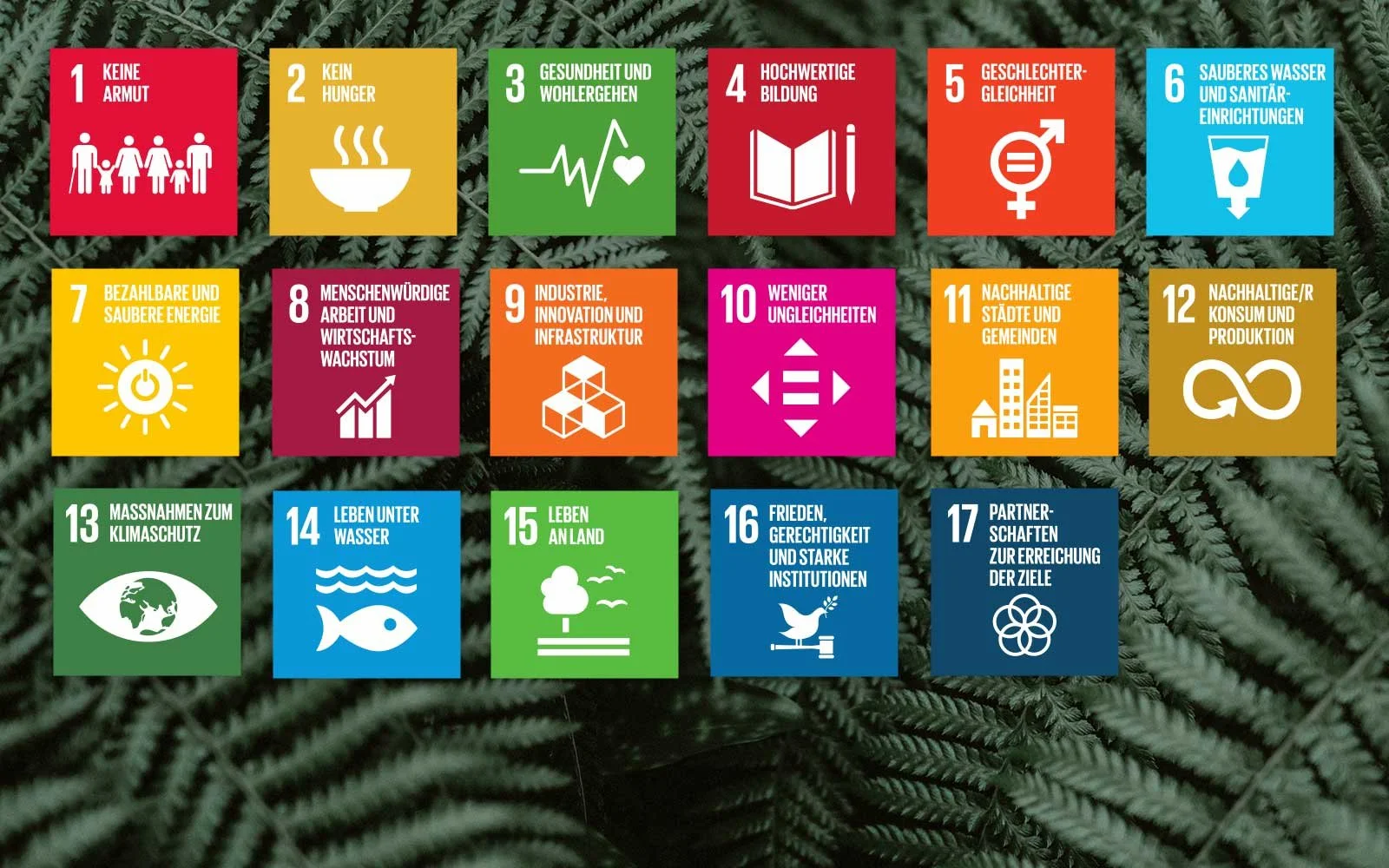
by Caroljean Willie
The Millennium Development Goals (MDGs) were adopted by the United Nations Millennium summit in September, 2000. Government leaders from countries around the world agreed to set these goals…
Biologist Explores the Roots of Religion in Trees
Women Provide Prophetic Voices in 1893 – Part 1
“As Columbus discovered America, the Columbian Exposition in Chicago discovered woman.” This was the optimistic boast of Bertha Palmer (1849-1918), president of the Board of Lady Managers at the Exposition, of which the 1893 World Parliament of Religions was part. She was a businesswoman and philanthropist. The Palmer House, where many participants in the 1993 Parliament stayed, bears her name.
Challenging Evangelical Assumptions
Evangelicals face enormous challenges in the pluralistic public square in the 21st century, especially among Muslims. Suspicion and fear of Muslims exist in many quarters as a result of 9/11 and other radical Muslim acts of terror in places like Spain and London and some bad habits about how most of us absorb news. We firmly believe that radical Muslims do not represent the majority of Muslims in the West, who have repeatedly disavowed terrorism. Clearly, most Muslims in the U.S. seek to live out their Muslim faith in ways that affirm and resonate with American values.
Linking Energy Conservation and Faith Communities
Looking out over the audience, I saw that the room was filled with every seat taken and a number of participants standing along the edges. It was a gathering sponsored by the White House office of Faith-based and Neighborhood Partnerships, attended by more than 150 representatives of widely diverse faith groups and congregations from across the country. Their common interest? Energy savings. A dollar saved [President Obama establishing the White House Office of Faith-based and Neighborhood Partnerships. Photo: White House] through energy conservation is a dollar that can be redirected toward more worthwhile ends – of which the various faiths have many.
Love in a Time of War
Here in the mountains of northern New Mexico where I have spent most of life, the winter solstice season is marked by fire. During Advent, families and businesses fill small paper bags with dirt and nestle yellow votive candles inside them. They line the adobe walls around their homes and the low hanging flat rooftops of their shops with these homemade lanterns, called farolitos, and kindle them at sunset. The entire valley glows with tiny golden lights. What began as a Spanish Catholic tradition is now a cherished ritual for our entire multicultural community.
An Interfaith Advent
Advent.
ad·vent/’ad,vent/Noun:
1.The arrival of a notable person, thing, or event.
2.The first season of the church year, leading up to Christmas and including the four preceding Sundays.
Looking Back – Interfaith 2012
If you’re an interfaith activist, you may have noticed how the movement is growing exponentially, how our dreams to reach around the world in one giant interfaith embrace are slowly, surely coming true. Globally there is good news (and bad, I’m afraid) coming from all directions.
More Interfaith Spiritual Resources
While there is a rising group of Americans who don’t identify with any religious label, many of them are pursuing spirituality without being boxed into one faith. Historically, spirituality has usually been associated with a specific tradition, but that is changing. Today, for some, interfaith spirituality can mean belonging to more than one faith group. For others it can be observing multiple diverse religious rituals while on your spiritual journey. For others it can be just going on a Sunday morning hike with religiously diverse friends. Whatever your path, here is a list of resources to help you start exploring interfaith spirituality:
2014 Parliament of the World’s Religions in Brussels Cancelled
Late last month a joint statement was posted cancelling Parliament of the World’s Religions in Brussels, previously scheduled for 2014.
How a Catholic Kid in Kentucky Became a San Francisco Swami
Looking back now, I guess my life is another testimony to “Ask and ye shall receive.” I was serious about religion as a child and, in one way or another, was always trying to find the truth and do the right thing. It was questioning and seeking that gradually led me step by step to become a sannyasi, or monk, in the tradition of Yoga.
Spirituality in the 21st Century
Interfaith Caravan Treks through BC’s Historic Interior Town on a Journey of Peace
When Rizwan Peerzada of the Ahmidya Community of BC approached me to participate as a speaker in the World Religious Conferences in Yukon and Inuvik then I happily agreed. The Ahmidya Community has been organizing interfaith conferences, quite often, to promote peace of Islam and harmony among diverse faith communities. Their motto is – “Love for all and hatred for none.” The members of this community not only talk about peace but practice it religiously.
The Spiritual Journey of a Climate Activist
For 44 years I have been a progressive activist and organizer, and for the last nine, a climate activist. Over these years I’ve always known that my upbringing in a family that took seriously the teachings and life example of Jesus of Nazareth had a lot to do with why I chose this course. Recently the importance of that spiritual grounding resurfaced as I’ve interacted regularly with people of various faiths within the Interfaith Moral Action on Climate (IMAC), a group I helped found about a year ago.
Tectonic Shifts in American Religion and Spirituality
The Pew Forum’s October 9 report on religion in America was released in the midst of a presidential campaign in overdrive, daily doses of bad-news business stories, violence in Syria and the threat of violence in Iran. Nevertheless, on October 9 the New York Times noticed what looks to be the biggest religion story of 2012, as did the Washington Post, CNN, Huffington Post, and dozens of other news outlets.
The Spiritual Formation of a Nazarene Interfaith Activist
As readers of the Interfaith Observer know full well, the world is in the midst of an unparalleled religious diversity. Everyone acknowledges this new reality. The ways we respond are legion. Historically, progressive religious adherents are most likely to identify as religious pluralists and work intentionally to develop new friendships with religious strangers.
Yes, But Pay Attention to the Details
Count me a team-member of the interspiritual movement. I am in sympathy with the goals of The Coming Interspiritual Age by Kurt Johnson and David Robert Ord, a grand, ambitious work with an optimistic vision of future global unity. Kurt Johnson’s mental scope on display here is astonishing. A polymath, he was for thirty years a distinguished scientist at the Museum of Natural History, penned an award-winning New York Times best seller about Vladimir Nabokov and butterflies, and regularly contributes to Wikipedia, all attesting to the breadth of his discussion of how humanity came to its current crises of religious conflict and spiritual dis-ease. Johnson and Ord’s ability to weave facts into sweeping historical narrative lends strength to their conclusions.
On Behalf of ‘the Many’
In this freewheeling book, Kurt Johnson and David Robert Ord attempt a truly daunting task: to tell the story — one that reaches back fourteen billion years — of what they call “the planet’s emerging unity consciousness,”1 or, in terms of their mentor Wayne Teasdale, the emerging Interspiritual Age. The authors define interspirituality as “the sharing of ultimate experiences across traditions,” “a more universal experience of the world’s religions, emphasizing shared experiences of heart and unity consciousness.” Fundamentally, however, interspirituality turns out to be monistic: “the entire religious experience of our species,” they write, “has been a single experience.”