




Religions for Peace USA regularly spotlights member communities to be featured in The Interfaith Observer. This month, Suzy Lamoreaux interviews Archimandrite Nathanael Symeonides of the Greek Orthodox Archdiocese, who represents the Archdiocese on RfPUSA’s Executive Council. The Archimandrite was appointed director of the Office of Inter-Orthodox, Ecumenical and Interfaith Relations in September 2013. Fr. Nathanael and his department work to spread interest in and knowledge of Church activities and teachings while “always respecting the sincerity of the religious convictions and spiritual sensitivities of others.”
Meditation for Kids
The oldest child in the room happened to be my son. He was seven years old at the time. The youngest child was only 4 years old. All the kids, along with a few teachers, were sitting on green meditation cushions arranged in a circle with their eyes closed. Actually, eyes were closed intermittently since there was a fair bit of peeking. “Place a hand on your belly,” she said, “and see if you can feel your breath. When you take a breath in, your belly should move out. When you let your breath go, your belly should move in.”
Parliaments Past – A Personal Journey
“Were you there yourself?” a student asked me after I had given a talk about the 1893 World’s Parliament of Religions. “No” was the answer, but Mary and I have taken part in all the modern Parliaments of World Religions.
Appreciating Paradox and Allegory
Anyone who enjoys poetic language should enjoy paradox. If you are like me, you’ll revel in the amusement paradoxes provide, and you’ll become intrigued with trying to resolve them. At the very least, they provoke us into probing ideas with a heightened degree of focus and criticism.
Charleston – Standing Together in Solidarity
In the wake of the shooting at Charleston, South Carolina, a question resurfaces in my mind. It is the same question that unfortunately arises time and again, whether it is the shooting at a Sikh Gurdwara in Oak Creek, Wisconsin, the shooting at a synagogue in West Jerusalem, or the attack on a mosque in Kuwait City. If Mr. Dylann Roof were in surgery, and the only blood available to save his life came from Rev. Clementa Pinckney or another member of his church – the blood that Mr. Roof has shed with deliberate planning – would he accept the blood or choose instead to die on the altar of his hate.
Toward an Ecological Civilization
The image of an aspen grove in Southern Utah called “Pando” became both a symbol and wake-up call for some 1,500 participants – including 130 from China – who attended an extraordinary ecological conference held at Pomona College in Claremont, California, June 4-7.
Anekantavada – Moving Beyond Exclusivist Religious Claims
Ahimsa, non-violence, is a fundamental teaching of Jainism, a small, ancient religion originating in India. The concept has inspired numerous non-violent activists around the world. From Gandhiji to Martin Luther King, ahimsa has been used to promote peace throughout the world.
Vignettes from Iran
‘A small group of Hindus, Buddhists, and Christians walked into a mosque in Iran ...’ sounds more like the start of a bar-joke than reality. But it happened in early June. We met, among others, with university professors, students, and clerics, even a high ranking Grand Ayatollah, in travels to Isfahan, Qom, Kashan, and Tehran.
“I Began Singing the Moment”
A Tiny Non-Profit Newsroom Making an Outsized Impact
For those who wonder how this story is about interfaith, it should be noted that the climate change movement is implicitly (and often explicitly) interfaith, through and through. Ed.
Preparing for Christian-Muslim Peace in the Future
Christian-Muslim relations are not going to go away. While awful atrocities being committed in some parts of the world by Muslims against Christians and by Christians against Muslims make building relations urgent, in the coming years the weight of global numbers will give added pressure.
NAIN Heads to Regina Next Month
“Restoring Spirit through Sacred Listening” is the theme of this year’s North American Interfaith Network (NAIN) Connect, July 19-22, being held in Regina, Saskatchewan, Canada. It is being planned by an thoroughly interfaith coalition of leaders, with strong input from First Nations communities.
The United Methodist Church – Rocky Mountain Conference
The United Methodist Church (UMC) was one of the three founding religious communities of Religions for Peace, along with the Unitarian Universalist Association and the Rissho Kosei Kai Buddhist community. Occasionally, Religions for Peace USA gets the chance to interview a leader from one of our member communities and highlight their good work. Suzy Lamoreaux, project coordinator of Religions for Peace USA, sat down with Rev. Dr. Youngsook Kang, director of Missions and Ministry for the Rocky Mountain Conference of the UMC.
Welcoming Vicki Garlock, New TIO Correspondent
More than 300 writers with a passion for interfaith culture have made TIO what it is today – a monthly treasure-chest of interfaith news and opinion. Representatives of dozens of religious, spiritual traditions, nationalities, and ethnic backgrounds have generously, freely contributed their work. You can find photos and short bios of each one here. More than 1,000 articles have been published in the past four years, testimony to the import of the interfaith culture emerging all over the world.
A Journey into the Language of Interfaith
Time and patience has ruled a journey that seemed to be lost in an abyss. It started in December 2009 while sitting on the floor of the Melbourne Conference and Exhibition Centre in a kindred conversation with Don Benson. We were both exhausted as the Parliament of World’s Religions approached its conclusion. In a moment of inspiration Don posed a proposition that seemed as hopeful as it was monumental.
Celebrating Ramadan – the Kids’ Perspective
I admit that I just didn’t get it. Several Muslim friends living in America said they don’t really fast for Ramadan anymore because it just isn’t the same here in the U.S. They claim that Ramadan is so much more fun in their home countries. Fun? Ramadan? Really?
The Jewish Imperative for Peacemaking
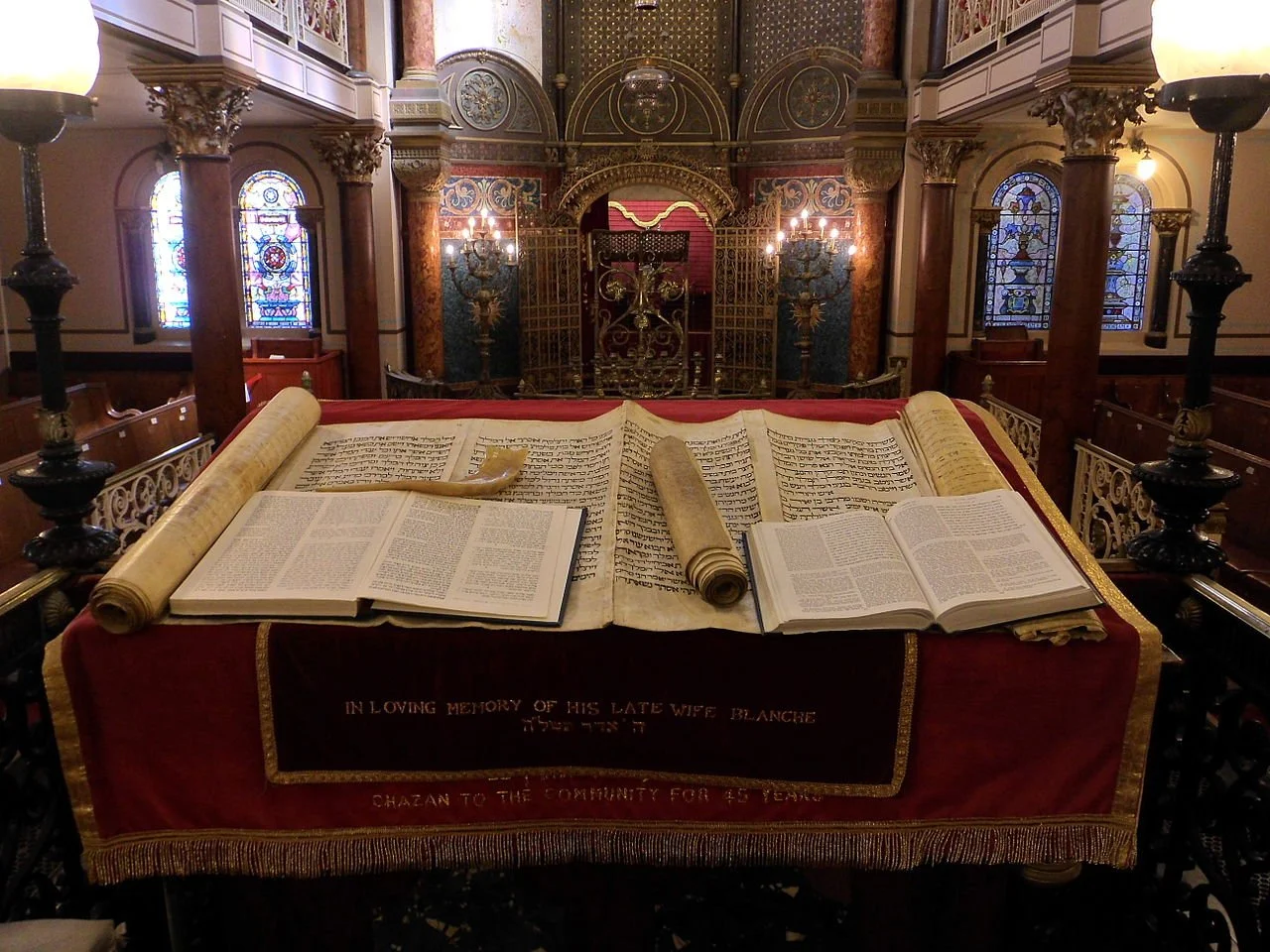
The Rabbis of the Talmud observed that most legislation in the Torah is case law. If we find a lost object, we are to return it to its owner. If we own property, we must take precautions to ensure the safety of those who enter it. If we see our enemy’s animal struggling under its load, we are to help him. When Shabbat (Sabbath) or a holy day comes, we are to observe it.
Interfaith Coalition for Immigrant Rights Keeps Leading
For a quarter century the grassroots interfaith movement has been best known for developing interfaith dialogue and new ‘bridge-building’ relationships. From the Parliament of the World’s Religions massive gatherings – to thousands of interfaith councils globally – to the 700 United Religion Initiative Cooperation Circles in 85 countries, grassroots interfaith leadership has been finding its voice in multiple arenas. Not so much in the public eye are thousands of interfaith organizations less concerned about being known than with engendering collaborative social justice activities, starting with meeting the needs of the hungry and homeless. Today many ‘cause’ campaigns, like those addressing climate change, have taken an interfaith posture for practical, collaborative purposes. Others, though, like the Interfaith Coalition for Immigrant Rights (ICIR), for years have used interfaith collaboration to fuel hands-on social justice ministry and activism. In a day when foundations are calling for ‘measurable results’ from their giving, and when ‘connect and collaborate’ are interfaith buzzwords, there is much to learn from groups like ICIR. Ed.
Philadelphia’s Dare to Understand Campaign
Last September a group known as the American Freedom Defense Initiative (AFDI) asked to purchase advertising space on the Southeastern Pennsylvania Transit Authority (SEPTA) as part of a larger anti-Islam campaign that AFDI has pursued in transit systems in several major cities across the country. We recently wrote about responses to this in California through street and bus art. Although SEPTA declined to run the ads due to their inflammatory anti-Islamic content, a federal judge granted AFDI’s motion for a preliminary injunction. The ads ran for four weeks, beginning on April 1, 2015, on 84 SEPTA buses.
A Liminal Religiosity
“There’s something about selecting one religion, one path, in the narrow way that I was brought up that seems so wrong, so unhelpful. The world is filled with wisdom. Human history is filled with wisdom. Why would I close myself off to that?”