


by Paul Chaffee
Empowerment is a tricky word, wrapping itself around a particularly complex word – power. For half a century empowerment has been popular cultural theme, particularly in management circles, albeit not without controversy.

by Sofia Sayabalian
Having the opportunity to visit Reykjavík, Iceland was a special one. I always thought of Iceland as an isolated place–far, freezing, and frosted with whispers…
by Frank DiGirolamo
“Wow! … You just listened to my whole anthem.” It was late at night, years ago, on North Broadway in Capitol Hill. “Miguel” had just recited his life story to me for a good 20 minutes…
by Camila Torres
When I was a child, I was terrified of the dark. I hated going to sleep, because, once the lights turned off, the sheer possibility of encountering a monster kept me awake…
by Amina Malkin
When talking about religion, my father will sometimes talk about “the chosen people,” a title that Jewish people have historically adopted as a way to reference being descended from…
by Paul Chaffee
Empowerment is a tricky word, wrapping itself around a particularly complex word – power. For half a century empowerment has been popular cultural theme, particularly in management circles, albeit not without controversy.
by Dr. Ed Bastian
Generally speaking, the word wisdom often connotes a holistic knowingness harvested from the totality of one’s life experience, including knowledge gained through intellectual conceptualization and empirical observation. From a spiritual perspective however, Wisdom (note the capital “W”) is generally said to be the result of a transcendent insight that surpasses, informs, and then guides our everyday thoughts, perceptions, and mental projections of reality.
by Cynthia Bourgeault
1. Wisdom is not a philosophy or a curriculum, but a way of knowing. It’s not about knowing more but knowing deeper, knowing with more of yourself involved. 2. Wisdom is three-centered knowing: it engages mind, emotions, and body in a single, integral act of perception.
by Rabbi Rami Shapiro
Wisdom, Chochmah in Hebrew, is the first of God’s manifestations and the means by which creation happens. I am the deep grain of creation, the subtle current of life. God fashioned me before all things; I am the blueprint of creation. I was there from the beginning, from before there was a beginning. I am independent of time and space, earth and sky.
by Swami Atmarupananda
An infant opens its eyes and ears to the world, and perceives an ocean of sensation. Gradually it learns to distinguish patterns – mother, father, its own hands, its feet. The ocean of sensation begins to make sense as patterns emerge. An ocean of indeterminate sensation gives way to understanding: the beginnings of knowledge.
by Shaikha Camille Adams Helminski
The Prophet Muhammad said, “Wisdom is like the truly faithful one’s stray camel; he (she) will recognize it when he (she) finds it.” Within the Way of Islam and the mystical path of Sufism, wisdom is received through the Qur’an (revelation of the “Book of God” conveyed through the heart of the Prophet Muhammad) and the example of how the Prophet, himself, lived, as well as through the “Book of Nature."
by Shaikh Kabir Helminski
The Generous Source of our being has brought us to this world and has given us intelligence, insight, compassion, and the possibility to discern: the subjective perspective from the objective, appearances from reality, beginnings from endings, the transient from the enduring.
by Dr. Ed Bastian
Shariputra, any noble son or noble daughter who so wishes to engage in the practice of the profound perfection of wisdom should clearly see this way: they should see perfectly that even the five aggregates are empty of intrinsic existence. Form is emptiness, emptiness is form; emptiness is not other than form, form too is not other than emptiness. Likewise, feelings, perceptions, mental formations, and consciousness are all empty.
by Vicki Garlock
Some decades ago a friend of mine, a college senior way back then, was attending a conference at a large, distinguished university of “pre-faculty” students, collegians who hoped to pursue a higher-education vocation in the next few years. The three-day gathering culminated in a large banquet, some final comments on the benefits of professordom from several university presidents, and a question & answer session.
by Marcus Braybrooke
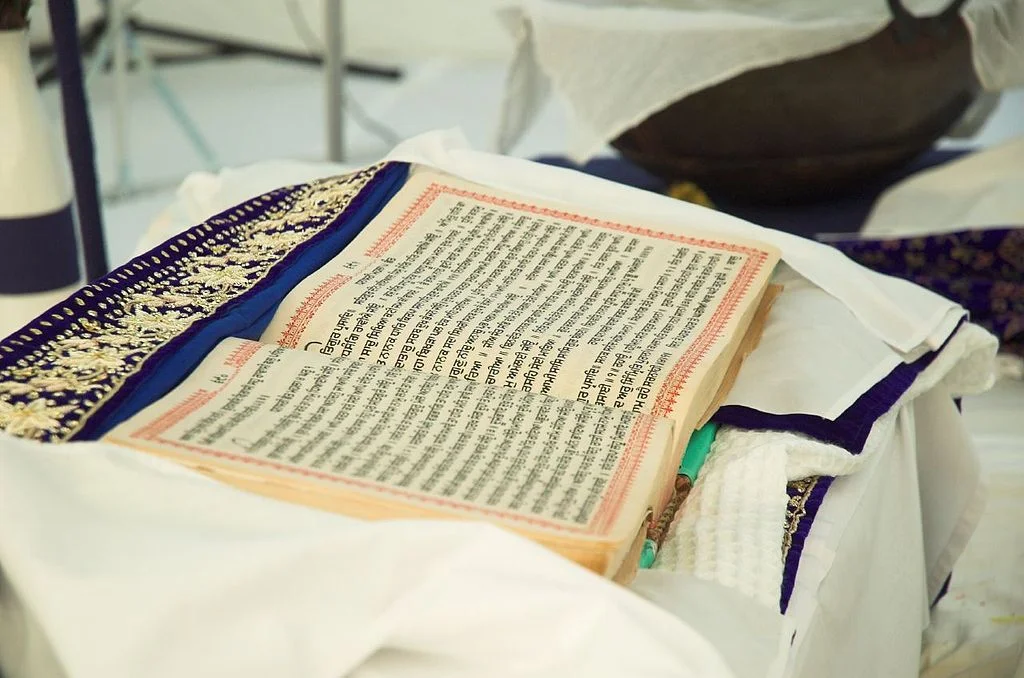
An overwhelming sense of the Glory and Oneness of God made Guru Nanak (1469-1539), the founder of Sikhism, impatient with religious divisions, doctrines, and rituals. This sense of the Oneness of God is for me at the very heart of the interfaith journey. There are many practical reasons why interfaith cooperation is vital and as many attempts to find a theological or philosophical justification for it.
by Ruth Broyde Sharone
“Wisdom includes action as well as knowledge,” maintains Joseph Prabhu, a professor of philosophy and religion for four decades, a passionate interfaith activist, and Mother Teresa’s first altar boy in India. “Action brings insight into dynamic motion,” Prabhu explains, “and insight without thoughtful action, to my mind, is seriously incomplete.”
by Frederica Helmiere
Oceti Sakowin Camp is a place of juxtapositions and marvels. Tribal leaders ceremonially sing and drum near the sacred fire while helicopters chop and drones buzz overhead. Ten thousand peaceful and prayerful water protectors abut a militarized police force of extractive corporation-protectors.
by Henry Ralph Carse
In the shadow of the ancient walls of the Old City of Jerusalem, on a sunny day in April, I am leading a small group of prophets down a pathway into the Kidron Valley, and then up the slopes of the Mount of Olives. I call them “prophets,” but these women and men in their twenties are not in old-fashioned robes or unkempt beards, nor roaring dire warnings about the end of time.
by Paul Chaffee
Do you know anyone you truly would call “wise”? What about that particular person leads you to deem her or him a wise person?
by Bettina Gray
On October 12th of this year, I was on a train between Moscow and Saint Petersburg traveling with members of the Slavyanka Russian Chorus on a concert tour of Russia.That particular morning a number of us were standing in the aisles or sitting on the arms of train seats, rocking between concert locations. We were saying the Ashamnu prayer, the prayer of confession and atonement for Yom Kippur, the holiest day of the year in the Jewish calendar.
Editorial by Paul Chaffee
Last month’s TIO editorial suggested that the United States of America was at a critical interfaith juncture. Since then the choice has been made.
by Marcus Braybrooke
“One should listen to and respect the religions of other people.” These words that Aśoka had engraved on rocks across his vast empire more than 2,000 years ago still need to be heard today. King Aśoka, the third monarch of the Indian Mauryan dynasty, was largely forgotten until early in the 19th century when a large number of edicts, inscribed on rocks and pillars, were discovered.
by David Parks-Ramage
What woman having ten silver coins, if she loses one of them, does not light a lamp, sweep the house, and search carefully till she finds it? (Luke 15:8) Meditation is a choice to become intimate with your own life. In meditation, we are quiet and alert, open and available to what is happening now.
by Jim Burklow
Religion can do a body good. And that’s not just a promise of good-pie-in-the-sky-when-you-die. There’s science behind the assertion that religion can benefit your physical and emotional health on this side of the Pearly Gates.
by Kathe Schaaf and Kay Lindhal
We have been captivated by the subtitle of the anthology Women, Religion and, Peacebuilding, edited by Susan Hayward and Katherine Marshall – Illuminating the Unseen. So much about the contributions of women to our culture and history has been invisible – both unrecorded and unacknowledged.