

Communication/Technology
Film/Webinars

by Megan Anderson
Below you will find our top picks from 2017. They cover the prayerful to the prophetic; they call us to reflect and to take action. Their messages are pertinent to the situations today and contain lessons each of us can learn from. So kick back and prepare to be inspired, challenged, and have your thoughts provoked.

by Paul Chaffee
What does living life as an ‘interfaith activist’ mean? Millions have joined the cause in recent months, so we can well ask ourselves: What do interfaith activists share in common within our own communities and in the world? A quick, simplistic answer might be that all of us are striving towards peacemaking with ‘the other.’

“Wait, you’re a Muslim? But you’re not even brown!”
When Emina, a member of Project Interfaith’s Youth Service activities in 2010, was faced with this challenge, rather than becoming defensive or shutting down, she took it seriously. With a video camera turned on, she explained her identity as a Muslim woman and addressed some of the misconceptions underlying that question. That got the staff at Project Interfaith thinking. We asked ourselves, What if more people had the chance to define and share their religious or spiritual identity in their own words and to confront the misconceptions and misunderstandings they face because of this? Thus RavelUnravel was born.
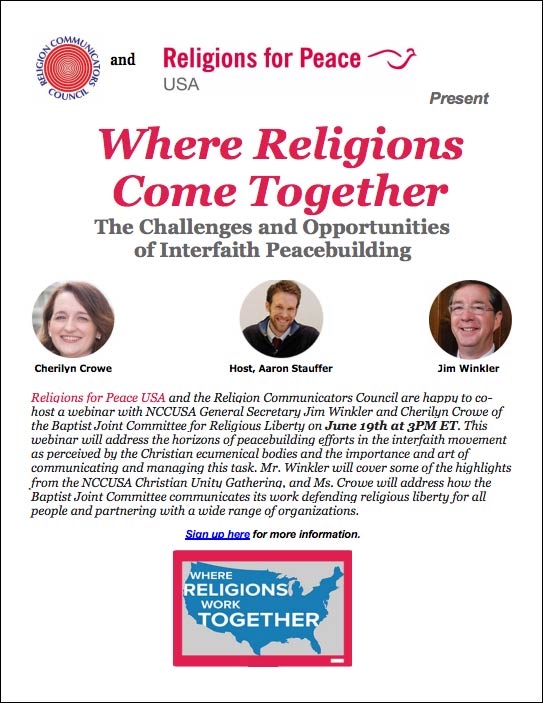

A Religions for Peace USA Webinar with GreenFaith
Review: NOAH (Directed by Darren Aronofsky)

Religions for Peace USA Webinar - December 17th, 3:00PM (Eastern Time)

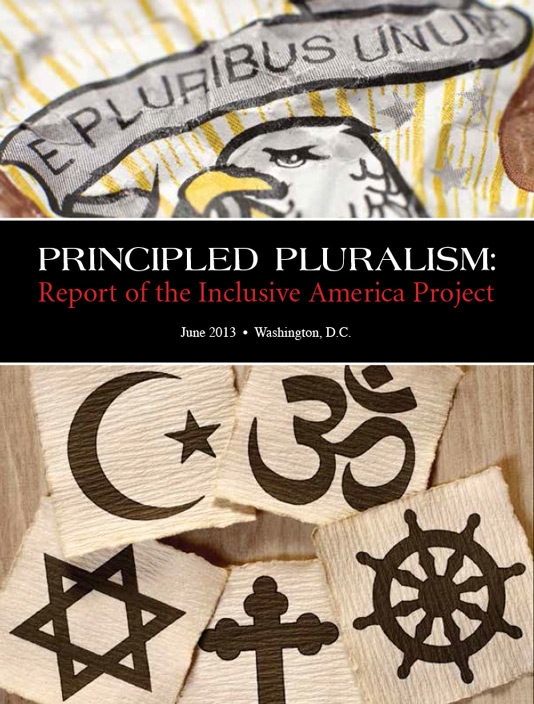
Next Religions for Peace USA Webinar

Tools for Getting Engaged
Internet
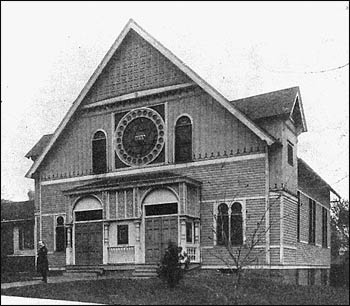
I’m the daughter of second-generation Americans (SGAs). My four grandparents immigrated to the United States in the early twentieth century to escape desperate economic conditions and the grinding anti-Semitism they faced as Jews in Eastern Europe. Each settled in the Midwest United States and eventually in Omaha, Nebraska, where there was and remains a small but vibrant Jewish community.

A recent study of young British Sikhs shows that while they may be digitally savvy and engage with religion on the Internet, for many of them, traditional offline community and authorities continue to play a central role.
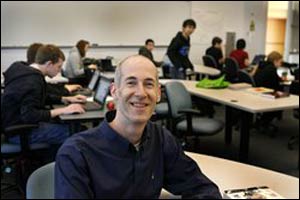
This past April, Allen Downey, a professor of computer science at Olin College of Engineering, published his study on the relationship between Internet use and the decline in religious affiliation among Americans. His findings went viral. Downey concluded that the Internet is responsible for a growing number of Americans who do not associate themselves with a religion. Many news outlets reported on Downey conclusions, most without any criticism: a quick Google search of “The Internet and religion” results in nothing but paraphrases from this single study.
Earlier this year an argument surfaced about the internet and religion. Is the internet taking people away from religion? Last April, Kimberly Winston of Religion News Service published “Is the Internet Bad for Religion?” She reviewed an academic paper by Allen Downey, a professor of computer science, whose research showed that “the share of Americans claiming no religious affiliation grew from 8 percent to 18 percent while the number of Americans connected to the Internet rose from almost nothing to 80 percent.”
In Virtually Sacred (2014), religious studies scholar Robert M. Geraci tackles the topic of religion in online games. While his approach and conclusions raise some questions, there is no question this book is long overdue.
New communication and Internet technologies have created a dynamic new media landscape that has changed the face of religion in two decades. From the early days of the World Wide Web in the 1990s, the conversation on religion in cyberspace has been, and continues to be, highly prolific. Over time the Internet has established itself as the foremost marketplace of religious ideas, ultimately drawing even the most reluctant of the faithful into its spaces, including unconventional new religions.

Online Journals/News

by Rev. Bud Heckman
One of the biggest religion stories today is the rising number of Americans who no longer identify with a particular religion. That is a given. But disaffiliation is only one side of the story.

by Megan Weiss
Very few religious, much less interfaith news publications have a related social arm, an active presence in the community they address. But Spokane Faith and Values (SpokaneFāVS), a small digital interfaith news platform in Spokane, Washington is proving it can happen.

by Paul Chaffee
A largely unknown treasure for interfaith activists is the convention held each year by the Religion Communicators Council (RCC). Founded in 1929, the RCC has given annual awards to religious communicators and to secular communicators working on religious subjects since 1949.
by Megan Weiss
I have always loved libraries. I worked at my hometown library for six years and at one point dreamed of becoming a librarian myself. Now this dream has come true, although in an unexpected way, since never once did I think I would be building a library from the bottom up!
When Heidi Campbell crossed the Atlantic to do graduate work at the University of Edinburgh in 1996, a new electronic tool called the “Internet” became a comfortable lifeline for staying in touch with friends and family. She was captivated by the new technology, ending up doing her Edinburgh doctorate on church and another new internet-enabled phenomenon, virtual communities. (For the uninitiated, virtual communities are groups of computer users who know and interact with each other electronically, not in person, at least much of the time.)

It is difficult to know where to turn to get accurate, interesting, creative, not to mention, meaty theological reflections exploring the social issues we face in the world today. The online forum State of Formation (SoF) offers such a place, and as the forum grows, the continuing legacy of writers, ideas, topics, and dialogue grows as well.
Radio

Social Media

by Megan Weiss
TIO is now on YouTube! What is on our channel? Since the launch of TIO’s new website in September 2016, each issue has included “feature videos” which are included in one of that month’s articles or seemed important to share with TIO readers.
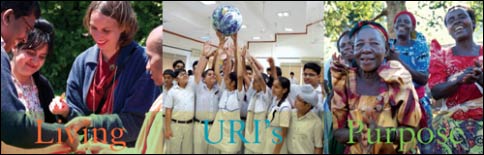
California-born Greg Harder invests three to five hours every day in front of his computer screen as a “cultural detective specializing in interfaith,” a phrase he coined to describe his internet social-media activities.
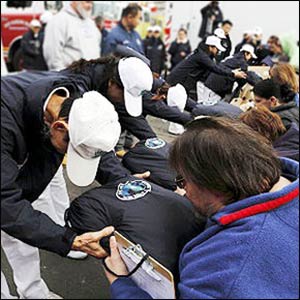
A recent study shows how digital and social media has allowed one of the largest international religious and benevolent organizations to keep in touch with its more than 10 million followers worldwide, and help them in their mission to provide humanitarian relief.
New Resource to End Online Hate-Speech

I first joined the interfaith movement as a precocious fifteen-year-old. With an English translation of the Qur’an in hand, I walked into a Christian Bible study at my high school and demanded that they help me get Muslims a space to pray during Ramadan. For me then, as it did throughout my time in college, interfaith activism meant something very clear: come together to build community, create safe space for meaningful dialogue, and act out the words of our scriptures to make change for the common good. Together, we squirmed at the thought of the emerging “slacktivist” movement, where activists use the internet as their main platform for their cause. The internet was just digital space, so how can it change anything?
Happy Black History month! TIO’s theme this month is new models of interfaith community. So it seems appropriate to explore different social media platforms supporting interfaith engagement, particularly with the younger generation. These five resources are the tip of the iceberg in terms of new social media platforms. But they are the most popular, free, and accessible social media resources, providing good ways to start for anyone beginning to explore social media platforms.


Technology
by Ruth Broyde Sharone
The iconic image of a male storyteller addressing an enraptured audience pressed shoulder to shoulder around a glowing campfire may soon be replaced by hijab and sari-clad young women holding their smart phones.

We’ve become the tools of our tools and the fault – and the solution – lie not in our tools, but in ourselves.
For all the stunning achievements of science and technology in the last 400 years, there has been a blind spot at the center of both enterprises: the absence of an overarching vision that ties everything together, or the recognition that, in fact, everything is indeed connected.
The sheer amount of information now makes it impossible for any single person to grasp the whole of knowledge, as Leonardo da Vinci once could. As a result, scientists and technologists become buried in silos of information with little or no vision of what is upstream or downstream of their work.
by Daniel Tutt
This past year I’ve been leading a new initiative at Unity Productions Foundation (UPF), whose mission is to counter bigotry and create peace through the media. Its documentary film The Sultan and the Saint is…